
A Bank of England interest rate rise at noon today, has been priced in by markets as close to certain. Because it is fully expected, the pound's reaction will turn on what the Bank says about further rises. Markets expect around four rises over the next year. Many banks think that is too many, and a cautious message alongside today's rise is the main risk for sterling. The dollar has fallen after the US midterms, but several banks expect the losses to be short-lived. The euro's gains against the dollar rest largely on dollar weakness, while France keeps it under pressure against the pound.
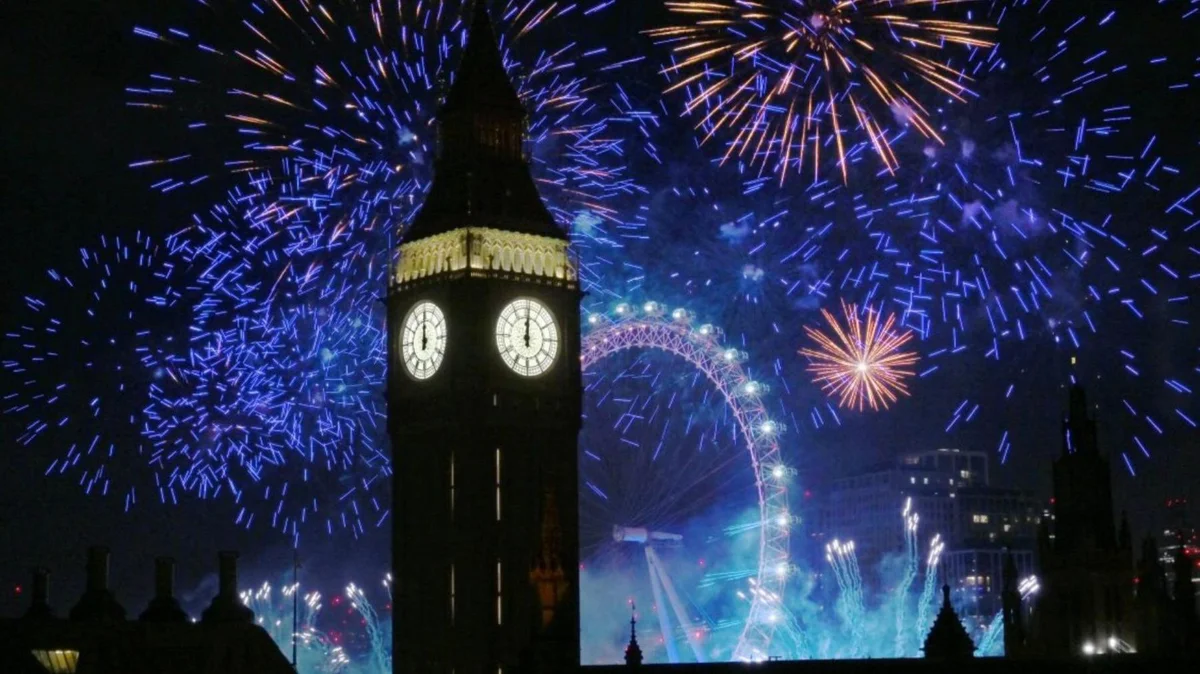
It is Bonfire Night, but for anyone watching currencies the main display comes at 12 noon, when the Bank of England announces its interest rate decision.
The pound arrives in good shape. Against the euro, it is testing an important milestone and trading near its strongest level in around 18 months. Against the dollar, it has climbed to a seven-week high after the US midterms. The question is not whether the Bank raises rates, but whether what it says next can justify those gains.
Why a rise looks likely
The Bank is widely expected to raise interest rates from 3.75% to 4%, its first increase since August 2023. UK consumer prices rose by 3.5% in the year to September, well above the Bank's 2% target, with motor fuels making the largest upward contribution. Last week's Budget passed without a market shock, leaving the Bank alone in the spotlight.
The evidence for a rise is strong. Financial markets see it as close to certain, and most banks expect a 7-2 vote, with external members Swati Dhingra and Alan Taylor voting to hold. Lloyds expects a narrower 6-3 split. MUFG sums up the mood: in its view, the Bank's long spell of waiting has run its course.
The Bank has also warned that it cannot wait for complete proof that higher energy costs are feeding into wages, services and the wider price-setting process. If it waits until that is obvious, it may already be too late.
Oil has nevertheless shifted the balance. Brent crude fell almost 9% on Wednesday to $94.29 a barrel as investors weighed whether the US midterm result could improve the chances of a settlement with Iran. Progress in those talks would likely pull oil lower, while a breakdown would send it higher.
Yet embers are not ashes. A few days of relief do not undo months of pressure, and the Bank's forecasts were built when energy prices were much lower. This week's fall in oil strengthens the case for caution after today, but it does not remove the case for acting now.
Capital Economics describes today's expected move as an “insurance hike”: a precaution against higher energy costs becoming embedded, rather than the start of a long run of rises.
If the Bank unexpectedly holds, the pound would likely give back some of its recent gains. On the evidence available, however, that remains the less likely outcome.
What the market has already priced in
Here lies the heart of the matter. Markets are not simply expecting a rise today. They have priced roughly four quarter-point rises over the next year, including today's, which would take Bank Rate close to 5%. The pound has rallied into today's meeting as if expecting a firm message.
Banks are divided on how far the Bank will go. UniCredit and MUFG both expect a second rise in February, taking Bank Rate to 4.25%. But MUFG says the market's four-rise path “still looks rich”, and the investment platform Wealth Club calls it “somewhat overblown” as consumers and companies start to turn more cautious.
That scepticism is widely shared. Commonwealth Bank of Australia agrees that a rise is likely today but, unlike the market, does not expect a series of them. MUFG, Wealth Club and ING have all questioned the market's four-rise path, and Reuters reports that the Bank itself may push back against it.
The Bank's own evidence points the same way. Its survey of business finance chiefs shows that firms expect pay growth to keep easing over the coming year, which is not the picture of runaway wage pressure that four rises would usually require. The rocket most at risk is not today's, but the next one.
What to listen for at noon
ING has set out the wording that would matter. A firm message would be the Bank saying that “some further tightening in monetary policy is likely to be appropriate”. A cautious one would be making any further rise clearly conditional on evidence that energy costs are spreading into wages and prices.
Barclays warns that a “dovish hike”, meaning a rise paired with cautious guidance, could hit sterling harder than usual because hedge funds have built sizeable bets on a stronger pound. J.P. Morgan is more relaxed, noting that the Federal Reserve and the ECB are also pushing back on market expectations, which may limit any fall in the pound.
Governor Bailey's own comments last month give clues on both sides. Speaking in Bangkok in October, he said the UK's neutral interest rate (the level at which rates neither hold back nor boost the economy) appears to have risen, meaning today's rates are doing less to restrain the economy than the Bank had assumed. If the Bank repeats that point today, it would strengthen the case for further rises. But he also said that so far the knock-on effects of higher energy costs on wider prices had been “quite subdued”, with businesses focusing on cost-cutting rather than price rises. If that message leads today, expect a more cautious tone.
The three possible outcomes
The rocket: the Bank raises rates and makes clear that more action may follow. Sterling could extend its gains, particularly if the vote is decisive and the inflation forecasts remain uncomfortable.
The sparkler: the Bank raises rates and delivers guidance broadly in line with expectations. Pleasant to watch, but unlikely to light up the sky.
The damp squib: the Bank raises rates but sounds cautious, or more members vote to hold than expected. This is the “dovish hike”. The pound could fizzle, particularly against the euro after so bright a run.
At noon, watch the nine-member vote, the Bank's new forecasts for growth and inflation (including its first assessment of the Budget), and the language Governor Andrew Bailey uses at the 12:30 press conference.
On balance, the evidence points to a rise accompanied by a cautious message. Markets look to have priced in more rises than the Bank is likely to endorse, and the pound has already rallied hard into the meeting. If so, some of sterling's recent momentum could fade, particularly against the dollar, where its gains are newer. Against the euro, France's difficulties are likely to limit any pullback.
The pound against the euro: France keeps the pressure on
The pound's rise against the euro has been steady and persistent. Technical indicators show the move is stretched, but forecasters who have expected a pullback in recent weeks have repeatedly been wrong. Trends with solid fundamental support can stay stretched for longer than expected, and Pound Sterling Live expects the pound to settle into a higher range, with any dips likely to be shallow.
The main support comes from France. In July, investors demanded about 1.1 percentage points more to lend to the UK government for ten years than to the French government. By the end of October, that gap had shrunk to just 0.36. In plain terms, investors now see French debt as almost as risky as British debt, and the euro has weakened against the pound in step. The extra yield on French debt over German debt also reached its widest level in 15 years in October.
The pressure built again last week. Fitch cut the outlook on France's credit rating to negative on Friday, outside its usual timetable, citing weaker growth, higher borrowing costs and a wider deficit. The French economy shrank by 0.1% in the third quarter. Two dates to watch: the French parliament's budget vote on 17th November, and the first round of the presidential election on 18th April 2027.
Views differ on how much further this can run. CIBC continues to favour the pound against the euro, pointing to higher UK interest rates, the Budget being out of the way and ongoing French risk. UBS is more cautious, warning that so many investors are already betting against the euro that there may be little selling left to push it lower.
Lessons from history: how high can the pound go?
The pound has traded far higher against the euro before. During the eurozone debt crisis of 2011 and 2012, it rose until the European Central Bank pledged to do “whatever it takes” to preserve the single currency. It climbed again in 2014 and 2015 as the UK economy strengthened and the ECB cut rates below zero, before the 2016 Brexit vote brought it back to earth.
The echoes today are unmistakable: pressure on French debt, and a Bank of England raising rates while the ECB moves more cautiously. But echoes are not repetitions. Nobody is questioning whether the euro will survive, and investors have already built sizeable sterling positions. To reach the heights of 2012 or 2015, France's problems would probably need to deepen, or the Bank would need to back the aggressive path already priced by markets.
The dollar after the US midterms
The Democrats won control of both the Senate and the House in Tuesday's midterm elections, and the scale of the win beat most forecasts. The dollar fell against all the major currencies, and the pound climbed to its strongest level against the dollar in seven weeks.
The reason was less about politics than about technology. Corpay and Danske Bank both link the move to concerns that a Democrat-controlled Congress will put the brakes on the AI and data centre investment boom that has powered US growth. Tech shares fell, US government borrowing costs dropped, and the newly elected governor of Texas, a key state for data centres, called for a pause on new developments.
Several banks expect the dollar's losses to prove short-lived. Commonwealth Bank of Australia points out that the President can still veto legislation, and overturning a veto needs a two-thirds majority in both chambers. Trade and foreign policy also remain with the White House. Underneath the politics, the US economy grew at a strong 3.4% annualised pace in the third quarter, inflation is still above target, and the Federal Reserve is expected to raise rates again in December. Barclays research also shows that, across the last nine midterms, the dollar has tended to recover modestly in the weeks after the vote.
For sterling against the dollar, two central banks are heading in the same direction, with oil setting the pace. Friday's US jobs report is the next real test: softer numbers could extend the dollar's decline, while a strong report could revive it.
The euro against the dollar: a squeeze, not a turnaround
The euro has bounced against the dollar, and it may have a little further to run in the short term. Speculators' bets against the euro are the largest since 2016, according to official US positioning data. When the dollar falls, those investors have to buy euros back to close their positions, which can lift the euro quickly, although the effect fades once the positions are cleared. Eurozone factory surveys are also at their strongest in four years.
But the bigger picture is less supportive. Eurozone inflation rose to 4.0% in October, a three-year high, yet underlying inflation held steady at 2.5%, giving the euro little lift. ING thinks December's expected ECB rise could be the last, and Rabobank expects the euro to soften against the dollar as the French election approaches. Tellingly, the euro has made no headway against the pound this week: most of its gain against the dollar is the dollar's loss.
Dates to watch
Today, 5th November: Bank of England decision, vote and Monetary Policy Report at 12 noon; Governor Bailey's press conference at 12:30; US weekly jobless claims at 1:30pm.
Friday 6th November: US jobs report at 1:30pm. Forecasters expect around 65,000 new jobs, after 29,000 last month, with unemployment at 4.2%.
Next week: Governor Bailey speaks on Monday 9th; US inflation, plus speeches from the Bank's Clare Lombardelli and Huw Pill, on Tuesday 10th; UK growth figures for the third quarter on Thursday 12th.
Further ahead: French budget vote on 17th November, UK inflation on 18th November, the Federal Reserve on 8th-9th December, and the Bank of England and the ECB on the same day, 17th December.
Friday 6th November: US jobs report at 1:30pm. Forecasters expect around 65,000 new jobs, after 29,000 last month, with unemployment at 4.2%.
Next week: Governor Bailey speaks on Monday 9th; US inflation, plus speeches from the Bank's Clare Lombardelli and Huw Pill, on Tuesday 10th; UK growth figures for the third quarter on Thursday 12th.
Further ahead: French budget vote on 17th November, UK inflation on 18th November, the Federal Reserve on 8th-9th December, and the Bank of England and the ECB on the same day, 17th December.
What this could mean for you
Businesses and individuals buying euros have seen sterling reach its strongest level in around 18 months. Today's decision could extend that advantage, but much of the good news is already priced in, and a cautious message from the Bank could quickly reverse part of the move.
Those buying dollars have benefited from the dollar's slide, but several banks expect it to be short-lived, and Friday's US jobs report is the next test. Businesses receiving euros or dollars are in the opposite position, because a stronger pound reduces the sterling value of their foreign-currency income.
For private clients purchasing property, moving investments or settling an estate abroad, relatively small currency moves can materially alter the final cost. On a €500,000 purchase, a 1% change in the exchange rate can alter the sterling requirement by roughly £4,000.
On days such as this, many clients prefer not to stake everything on a single moment. Buying in stages, fixing part of a future requirement with a forward contract, or setting a target-rate order that acts automatically if the market reaches a chosen level can reduce the risk of relying on one rate at one time. The appropriate balance depends on the payment date, available cash and tolerance for market movement.
The real suspense lies not in the decision, but in the words that follow it. The Bank may deliver the expected firework at noon. Whether sterling is still glowing by the evening will depend on what policymakers say comes next.