
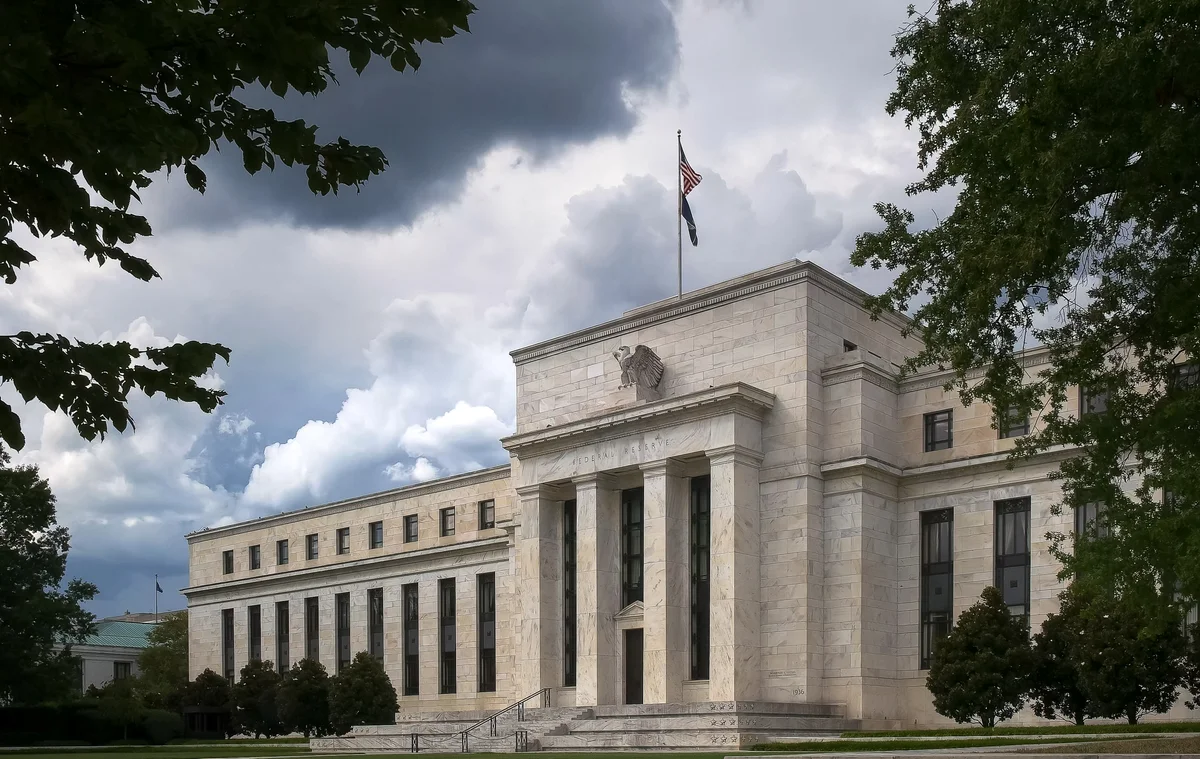
Friday's non-farm payrolls report only mattered if it showed a serious retraction. It didn't. The economy added 162,000 jobs in August against street expectations of 56,000, and July's reported losses were revised away entirely. September hike pricing nudged up to around 60 percent, but the print that matters is this Friday's US inflation report, four days before the Fed meets.
The Fed has made it clear which side of its mandate it is watching: Warsh said at Jackson Hole that "as of now, I believe the labor markets are consistent with full employment." Employment, on the Fed's own reading, is where it wants it. Inflation is the concern. A strong jobs print gives the hawks nothing, because nobody was arguing the economy is too weak to handle higher rates.
A Decision That Rounds
We enter a very odd scenario. If we get 0.2 percent on the core reading, a hold is the likely next step. If we get 0.3, a hike would likely follow. The gap between those outcomes is a tenth of a percentage point, so markets will genuinely be looking into the basis points of the print to see which way it rounds.
This is not good monetary policy. It is the peculiar scenario we find ourselves in thanks to Warsh and his lack of forward guidance. He told Jackson Hole he is "committed to a discipline, not to a decision," so markets are left guessing the next move from each data release. Even Waller, the committee's leading dove, has said his vote depends on the data due over the next two weeks, and his message was to "give disinflation a chance." Whether it continued comes down to Friday.
The Corner Warsh Built
You could argue the Fed has cornered itself into a hike, and Jackson Hole is why. The summer's better inflation readings, in his words, "do not tell me that underlying trends have meaningfully improved." He said he would be "hard pressed to describe broad financial conditions as restrictive." And he was blunt about the record: "the responsibility for 65 months of sustained, elevated inflation sits squarely with the central bank. And that is where it belongs."
So consider what holding after all that would look like. Warsh has only chaired two meetings, but we saw in July what a hold alongside hawkish talk does. The 30-year sold off 12 basis points in the meeting to 5.23 percent, its highest since 2007, and the dollar fell as yields climbed. The market was openly pricing its doubt that he would ever act. The pressure has not let up since. The long end has pushed to 5.31 percent, and the US Treasury has had to double its buybacks of long-dated debt to try and steady the market. Another hold after everything he said at Jackson Hole would likely mean another long-end selloff and a weaker dollar.
Why October Is Unlikely
The October meeting concludes six days before the midterms. Warsh was nominated by this White House and publicly embraced by it, and the administration openly calls for lower rates. A hike that close to the vote would look political, whichever way you cut it, and a hike is the only move in question. We find it a very tough meeting to call live. So if the Fed does not move on the 16th of September, the next realistic chance is the 9th of December.
That is a three-month gamble against a deteriorating backdrop. Brent is around 98 dollars a barrel after a 7.6 percent surge last week, and this is the level where demand is not yet destroyed but inflation definitely starts to bleed through. Over the weekend there were strikes on tankers from both sides, and Tehran has announced a restricted maritime zone beyond the Strait of Hormuz. Average US diesel prices are at an all-time high near 5.85 dollars a gallon, and diesel feeds into the cost of nearly everything. Trade is pushing the same way: Washington's 50 percent tariffs on Canadian goods have been in force since late August, and Ottawa's matching counter-tariffs on over 700 American products took effect this morning.
What is also worth noting is the backdrop to the soft summer prints. They covered months when the ceasefire memorandum was holding and Brent traded in the low-to-mid 70s. That world is gone, and ask yourself what incentive Tehran has to bring it back before November. A settlement hands the White House a win going into the midterms, and Tehran can see as well as anyone that the President's approval rating is through the floor. So holding in September is not patience. It is a bet that inflation behaves for three months, with no ability to react until December.
The Obvious Objection
The issue, you could argue, is that hiking resolves none of this. A quarter point does not reopen the Strait or bring diesel prices down. We made exactly this argument about the Bank of England.
But the counter is simple. Britain's wage channel was closed and its policy rate was plainly restrictive. America is at full employment on the chairman's own description, has had elevated inflation for 65 months on his own count, and both ends of the committee agree policy is barely biting: Warsh says he would be "hard pressed" to call conditions restrictive, and even Waller concedes policy is only "slightly restricting" demand. So if rates are not restrictive, and it is very hard to argue they are, what is the harm in a quarter point that buys back credibility and anchors the long end? A 0.3 core print on Friday likely forces the move. Only a soft one spares it.
What This Means for Businesses
It is a heavy two weeks: the ECB on Thursday the 10th, US inflation on Friday the 11th, the Fed on Wednesday the 16th, the Bank of England on Thursday the 17th. The euro is watching Friday too. Thursday's ECB hike to 2.50 percent is fully priced, so the euro only really benefits if the Fed then holds and the rate gap narrows.
For dollar exposure the risk runs both ways off one number. A soft core print takes the hike out of the price and the dollar with it. A hot print all but forces the Fed's hand, and we would expect a sharp dollar rally, with sterling pushed back towards 1.33. If your margins depend on rates staying near current levels, the question is how much of that you want riding on a single release. To talk through the options before Friday, speak to the Lamera Capital dealing team.