
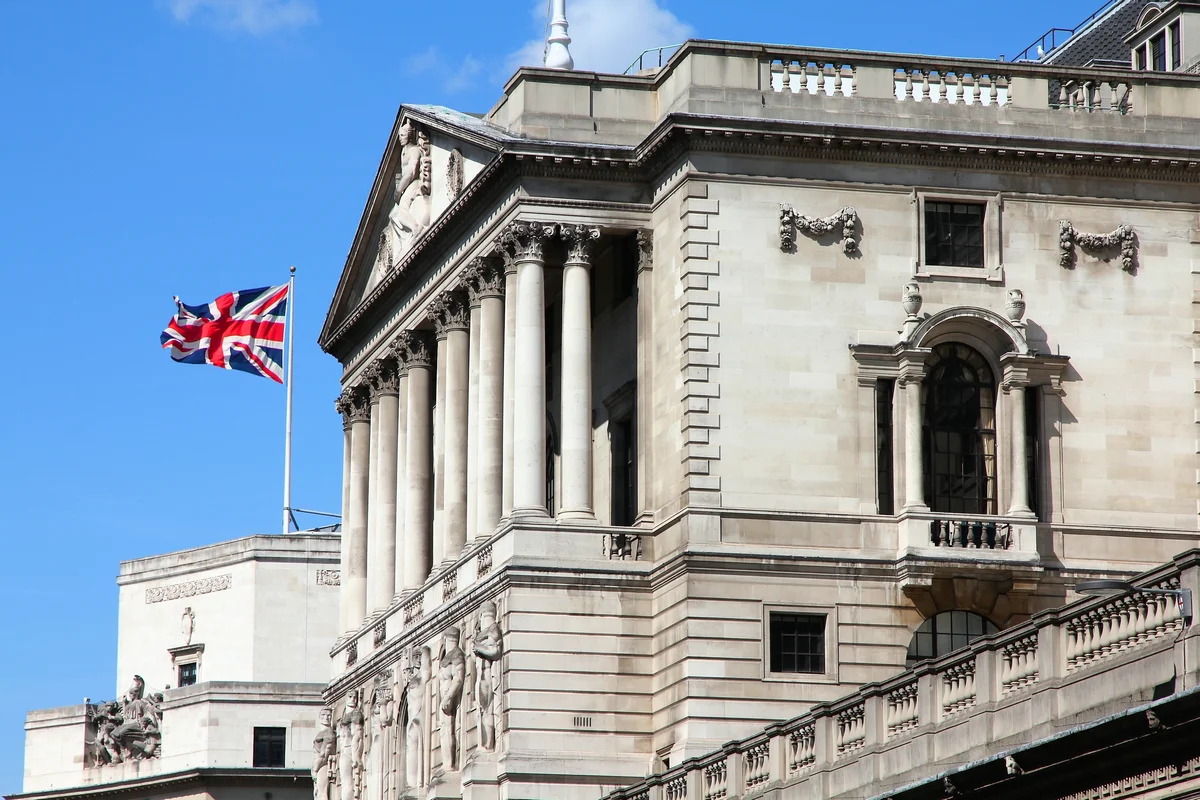
Central banks are among the most important influences on global foreign exchange markets.
An interest-rate decision from the Bank of England, Federal Reserve or European Central Bank can move currencies within seconds. Inflation figures, wage data, employment reports and even comments from individual policymakers can have a similar effect because they can change expectations about what central banks are likely to do next.
For Sterling, the Bank of England is therefore central to understanding movements in currency pairs such as GBP/USD, GBP/EUR and GBP/CAD.
But the relationship is more complicated than the familiar idea that higher interest rates strengthen a currency and lower interest rates weaken it.
Foreign exchange markets are forward-looking. Traders continuously assess where interest rates are likely to be months or even years ahead and attempt to price that outlook into currencies today.
That means the most important question is often not:
What did the Bank of England do?
It is:
What did the Bank of England do compared with what the market was expecting, and what does it tell us about what could happen next?
That distinction helps explain why Sterling can sometimes fall after an interest-rate rise, strengthen when Bank Rate is left unchanged or barely react to an inflation figure that appears significant at first glance.
This guide explains how the Bank of England influences the Pound, why inflation and economic data matter for GBP and how businesses can interpret central-bank decisions in the context of their own foreign exchange exposure.
How Does the Bank of England Affect the Pound?
The Bank of England primarily influences Sterling through monetary policy.
Its main monetary-policy tool is Bank Rate. Changes in Bank Rate influence borrowing costs, saving rates, bond yields and wider financial conditions across the UK economy. They can also change the relative returns available from Sterling-denominated assets.
Higher expected UK interest rates can make those assets relatively more attractive to international investors. That can increase demand for Sterling and support GBP.
Lower interest-rate expectations can work in the opposite direction.
The Bank of England itself explains that higher interest rates can increase the value of Sterling relative to other currencies because higher returns may increase demand for Pounds. Importantly, however, the Bank does not set the exchange rate itself.
A useful simplified way of thinking about the relationship is:
Economic data → Bank of England expectations → UK interest rates and yields → demand for Sterling assets → GBP exchange rates
That is the one transmission chain worth remembering.
The reality around it is considerably more nuanced.
What Is the Bank of England?
The Bank of England is the UK's central bank.
The Bank of England Act 1998 established the modern monetary-policy framework and the Monetary Policy Committee. In relation to monetary policy, the Bank's statutory objectives include maintaining price stability and, subject to that, supporting the Government's economic policy.
The Government currently defines price stability through a 2% inflation target, measured using the Consumer Prices Index.
The Bank has operational responsibility for monetary policy, while decisions are taken by its Monetary Policy Committee, usually referred to as the MPC.
The Bank's objective is not to ensure inflation is exactly 2% every month. Economic shocks will inevitably push inflation above and below target.
Instead, monetary policy is set with a medium-term perspective, aiming to return inflation sustainably towards the target while recognising the impact policy can have on economic activity and employment. The MPC reiterated that approach at its July 2026 meeting.
What Is the Monetary Policy Committee?
The MPC is the nine-member committee responsible for deciding UK monetary policy.
It includes the Governor, senior Bank officials and external members appointed through the UK's monetary-policy framework. Each member votes individually on the appropriate policy decision.
This matters for FX markets because a Bank of England announcement contains more information than simply:
raise, hold or cut.
The voting split can reveal whether opinion inside the Bank is changing.
For example, a decision to leave rates unchanged by 9–0 carries a different message from exactly the same decision made by 5–4.
In both cases, Bank Rate stays where it is.
But in the second case, markets may conclude that the Committee is much closer to changing policy.
That can alter expectations for future rates and therefore move GBP even though Bank Rate has not actually changed.
As we will see later, this is not merely theoretical. It is happening within the Bank of England in 2026.
What Is Bank Rate?
Bank Rate is the Bank of England's main policy interest rate.
It influences interest rates throughout the UK financial system, affecting the cost of borrowing and the returns available on savings and investments. Bank Rate has been 3.75% since December 2025 and remains at that level following the July 2026 MPC meeting.
The Bank uses monetary policy primarily to influence demand and inflation.
When interest rates are higher, borrowing becomes more expensive and saving can become more attractive. Households and businesses may spend and invest less, reducing demand across the economy.
Over time, weaker demand can make it harder for businesses to raise prices and can help bring inflation down.
Lower interest rates broadly work in the opposite direction.
Those changes also affect financial markets, and that is where Bank Rate begins to connect directly with Sterling.
How Do Higher Interest Rates Affect the Pound?
Suppose investors expect UK interest rates to rise while interest rates elsewhere remain unchanged.
Returns available on some Sterling-denominated assets may become relatively more attractive. International investors seeking those returns may need to purchase Pounds before investing in UK assets.
Greater demand for GBP can support Sterling.
That is why a more hawkish Bank of England is often associated with a stronger Pound.
But the phrase "all else being equal" matters enormously.
Currencies are relative prices. Investors are comparing UK rates with rates elsewhere, while simultaneously reacting to growth, inflation, politics, risk sentiment and global capital flows. Most importantly, markets normally try to anticipate a rate change before it happens.
Why Higher Interest Rates Do Not Always Strengthen GBP
Consider a simple example.
Markets have spent several weeks expecting the Bank of England to raise Bank Rate by 0.25 percentage points.
As confidence in that forecast grows, Sterling strengthens because traders position for higher UK rates.
Decision day arrives and the Bank delivers exactly the expected 0.25 percentage-point increase.
GBP barely moves.
There is nothing unusual about that. The market had already priced in the decision.
Now imagine markets expect Bank Rate to remain unchanged, but the MPC unexpectedly raises it.
That is genuinely new information. Investors may need to reassess the entire expected path of UK interest rates, potentially producing a much larger Sterling reaction.
There is also a third possibility.
The Bank raises rates as expected but simultaneously signals that it believes no further increases will be required.
Sterling could actually fall after the rate rise if markets had previously expected further tightening.
This is one of the most important concepts in central-bank analysis:
Currencies tend to react to the difference between expectations and reality, not simply to whether interest rates went up or down.
An interest-rate decision from the Bank of England, Federal Reserve or European Central Bank can move currencies within seconds. Inflation figures, wage data, employment reports and even comments from individual policymakers can have a similar effect because they can change expectations about what central banks are likely to do next.
For Sterling, the Bank of England is therefore central to understanding movements in currency pairs such as GBP/USD, GBP/EUR and GBP/CAD.
But the relationship is more complicated than the familiar idea that higher interest rates strengthen a currency and lower interest rates weaken it.
Foreign exchange markets are forward-looking. Traders continuously assess where interest rates are likely to be months or even years ahead and attempt to price that outlook into currencies today.
That means the most important question is often not:
What did the Bank of England do?
It is:
What did the Bank of England do compared with what the market was expecting, and what does it tell us about what could happen next?
That distinction helps explain why Sterling can sometimes fall after an interest-rate rise, strengthen when Bank Rate is left unchanged or barely react to an inflation figure that appears significant at first glance.
This guide explains how the Bank of England influences the Pound, why inflation and economic data matter for GBP and how businesses can interpret central-bank decisions in the context of their own foreign exchange exposure.
How Does the Bank of England Affect the Pound?
The Bank of England primarily influences Sterling through monetary policy.
Its main monetary-policy tool is Bank Rate. Changes in Bank Rate influence borrowing costs, saving rates, bond yields and wider financial conditions across the UK economy. They can also change the relative returns available from Sterling-denominated assets.
Higher expected UK interest rates can make those assets relatively more attractive to international investors. That can increase demand for Sterling and support GBP.
Lower interest-rate expectations can work in the opposite direction.
The Bank of England itself explains that higher interest rates can increase the value of Sterling relative to other currencies because higher returns may increase demand for Pounds. Importantly, however, the Bank does not set the exchange rate itself.
A useful simplified way of thinking about the relationship is:
Economic data → Bank of England expectations → UK interest rates and yields → demand for Sterling assets → GBP exchange rates
That is the one transmission chain worth remembering.
The reality around it is considerably more nuanced.
What Is the Bank of England?
The Bank of England is the UK's central bank.
The Bank of England Act 1998 established the modern monetary-policy framework and the Monetary Policy Committee. In relation to monetary policy, the Bank's statutory objectives include maintaining price stability and, subject to that, supporting the Government's economic policy.
The Government currently defines price stability through a 2% inflation target, measured using the Consumer Prices Index.
The Bank has operational responsibility for monetary policy, while decisions are taken by its Monetary Policy Committee, usually referred to as the MPC.
The Bank's objective is not to ensure inflation is exactly 2% every month. Economic shocks will inevitably push inflation above and below target.
Instead, monetary policy is set with a medium-term perspective, aiming to return inflation sustainably towards the target while recognising the impact policy can have on economic activity and employment. The MPC reiterated that approach at its July 2026 meeting.
What Is the Monetary Policy Committee?
The MPC is the nine-member committee responsible for deciding UK monetary policy.
It includes the Governor, senior Bank officials and external members appointed through the UK's monetary-policy framework. Each member votes individually on the appropriate policy decision.
This matters for FX markets because a Bank of England announcement contains more information than simply:
raise, hold or cut.
The voting split can reveal whether opinion inside the Bank is changing.
For example, a decision to leave rates unchanged by 9–0 carries a different message from exactly the same decision made by 5–4.
In both cases, Bank Rate stays where it is.
But in the second case, markets may conclude that the Committee is much closer to changing policy.
That can alter expectations for future rates and therefore move GBP even though Bank Rate has not actually changed.
As we will see later, this is not merely theoretical. It is happening within the Bank of England in 2026.
What Is Bank Rate?
Bank Rate is the Bank of England's main policy interest rate.
It influences interest rates throughout the UK financial system, affecting the cost of borrowing and the returns available on savings and investments. Bank Rate has been 3.75% since December 2025 and remains at that level following the July 2026 MPC meeting.
The Bank uses monetary policy primarily to influence demand and inflation.
When interest rates are higher, borrowing becomes more expensive and saving can become more attractive. Households and businesses may spend and invest less, reducing demand across the economy.
Over time, weaker demand can make it harder for businesses to raise prices and can help bring inflation down.
Lower interest rates broadly work in the opposite direction.
Those changes also affect financial markets, and that is where Bank Rate begins to connect directly with Sterling.
How Do Higher Interest Rates Affect the Pound?
Suppose investors expect UK interest rates to rise while interest rates elsewhere remain unchanged.
Returns available on some Sterling-denominated assets may become relatively more attractive. International investors seeking those returns may need to purchase Pounds before investing in UK assets.
Greater demand for GBP can support Sterling.
That is why a more hawkish Bank of England is often associated with a stronger Pound.
But the phrase "all else being equal" matters enormously.
Currencies are relative prices. Investors are comparing UK rates with rates elsewhere, while simultaneously reacting to growth, inflation, politics, risk sentiment and global capital flows. Most importantly, markets normally try to anticipate a rate change before it happens.
Why Higher Interest Rates Do Not Always Strengthen GBP
Consider a simple example.
Markets have spent several weeks expecting the Bank of England to raise Bank Rate by 0.25 percentage points.
As confidence in that forecast grows, Sterling strengthens because traders position for higher UK rates.
Decision day arrives and the Bank delivers exactly the expected 0.25 percentage-point increase.
GBP barely moves.
There is nothing unusual about that. The market had already priced in the decision.
Now imagine markets expect Bank Rate to remain unchanged, but the MPC unexpectedly raises it.
That is genuinely new information. Investors may need to reassess the entire expected path of UK interest rates, potentially producing a much larger Sterling reaction.
There is also a third possibility.
The Bank raises rates as expected but simultaneously signals that it believes no further increases will be required.
Sterling could actually fall after the rate rise if markets had previously expected further tightening.
This is one of the most important concepts in central-bank analysis:
Currencies tend to react to the difference between expectations and reality, not simply to whether interest rates went up or down.
FX Markets Trade Expectations
Foreign exchange markets do not wait for the next MPC meeting to decide what UK interest rates should mean for Sterling.
Investors continuously estimate where Bank Rate may be in three months, six months, one year and beyond.
Those expectations are reflected in instruments across money markets and government bond markets and can change rapidly when new information arrives.
This explains why GBP can move after an inflation report, employment data or a speech by an MPC member even though Bank Rate itself has not changed.
The market is effectively asking:
Does this new information change what we think the Bank of England will do next?
If the answer is yes, Sterling may move immediately.
Why Inflation Matters So Much for the Pound
Inflation is particularly important because the Bank's monetary-policy framework is built around the 2% CPI target.
If inflation is proving more persistent than expected, investors may conclude that the Bank needs to keep rates higher for longer or potentially increase them.
That can support Sterling.
If inflation is falling more quickly than expected, there may be greater scope for lower rates, potentially weighing on GBP.
Again, the important word is expected.
A 3% inflation reading could strengthen Sterling in one month and weaken it in another depending on what economists and financial markets had forecast beforehand.
Headline inflation is not the only measure that matters either.
Policymakers will look at the composition of inflation and try to distinguish between temporary external shocks and more persistent domestic pressures.
That distinction is especially important when energy prices are driving the headline rate.
Why Wages and Employment Matter for GBP
The labour market is another major part of the inflation picture.
If workers are difficult to recruit and wage growth is very strong, businesses may face higher labour costs. In labour-intensive sectors, particularly services, those costs can feed into prices.
Persistent wage growth can therefore make the Bank more cautious about lowering interest rates.
A softer labour market can work in the opposite direction. Rising unemployment, fewer vacancies and slower private-sector pay growth can indicate that domestic inflation pressure is becoming less intense.
That does not mean every weaker employment report is automatically negative for Sterling.
It means labour data can alter the market's judgement about how restrictive monetary policy needs to be.
The latest UK figures provide a good example: unemployment was estimated at 4.9% in April to June, private-sector regular earnings growth was 2.8%, and vacancies fell to 707,000 in May to July. The ONS notes that, outside the pandemic period, vacancies were last at 707,000 or lower in late 2014.
Why Economic Growth Can Move the Pound
GDP matters for similar reasons.
If the UK economy is significantly stronger than expected, markets may conclude that the Bank has less reason to lower interest rates. Strong demand can also increase the risk of inflation remaining above target.
That can be supportive for Sterling.
Weak economic growth can increase expectations of easier monetary policy.
But again, the data have to be interpreted together.
Strong growth accompanied by stable inflation creates a different policy problem from strong growth accompanied by rapidly accelerating prices.
The MPC is assessing the balance between inflation and economic activity rather than reacting mechanically to individual statistics.
What Do Hawkish and Dovish Mean?
Two terms appear repeatedly in central-bank and FX commentary: hawkish and dovish.
Hawkish
A policymaker is generally considered hawkish when they place relatively greater emphasis on inflation risks and favour tighter monetary policy.
That can mean supporting:
- higher interest rates;
- rates remaining higher for longer; or
- less willingness to cut rates.
A Bank of England announcement that is more hawkish than markets expected can therefore support Sterling.
Dovish
A policymaker is generally considered dovish when they see greater scope for easier monetary policy, perhaps because inflation is falling or economic activity is weakening.
That can mean supporting:
- lower interest rates;
- earlier rate cuts; or
- less likelihood of further tightening.
A dovish surprise can put GBP under pressure however, these descriptions are always relative.
A statement can sound hawkish in isolation and still weaken Sterling if traders expected the Bank to be even more hawkish.
GBP Is Always a Relative Trade
Understanding the Bank of England is only half of any Sterling currency pair.
GBP/USD represents the value of Sterling relative to the US Dollar.
GBP/EUR represents Sterling relative to the euro.
That means GBP/USD reflects both Bank of England and Federal Reserve expectations, while GBP/EUR reflects both the Bank of England and European Central Bank.
The same applies elsewhere:
Currency pair Central-bank comparison
| GBP/USD | Bank of England vs Federal Reserve
| GBP/EUR | Bank of England vs European Central Bank
| GBP/CAD | Bank of England vs Bank of Canada
| GBP/AUD | Bank of England vs Reserve Bank of Australia
| GBP/NZD | Bank of England vs Reserve Bank of New Zealand
Imagine the Bank of England becomes more hawkish.
Normally that could support GBP, but if the Federal Reserve simultaneously becomes substantially more hawkish, US interest-rate expectations could rise even faster than UK expectations. GBP/USD could still fall. This is why FX dealers often talk about central-bank divergence.
The question is not simply:
Is the Bank of England becoming more hawkish?
It is:
How is the Bank of England changing relative to the central bank on the other side of the currency pair?
Bank of England Outlook: August 2026
Current analysis - 19th August 2026
The present UK policy debate is a useful real-world demonstration of almost every concept discussed above.
Bank Rate remains at 3.75%, but the balance of opinion within the MPC has changed materially over the past several meetings.
The Hawkish Minority Has Grown
In April 2026, the MPC voted 8-1 to keep Bank Rate at 3.75%, with one member preferring an increase to 4%.
In June, the vote became 7-2, with two members supporting 4%.
In July, it moved again to 6-3, with Megan Greene, Catherine Mann and Huw Pill all voting to raise Bank Rate to 4%.
MPC meeting Bank Rate decision Hold Raise to 4.00%
| April 2026 | 3.75% | 8 | 1
| June 2026 | 3.75% | 7 | 2
| July 2026 | 3.75% | 6 | 3
On the surface, that progression looks clearly hawkish.
But this is where central-bank interpretation becomes important.
A growing minority does not necessarily mean the centre of the Committee is moving towards the same position.
Bailey Pushes Back Against an Imminent Hike
After July's decision, Governor Andrew Bailey explicitly cautioned reporters against interpreting the meeting as evidence that the Bank itself was moving towards an increase.
Reuters reported that two-year gilt yields fell sharply after his remarks and markets pushed back the expected timing of the first rate increase from November to December at that point.
That creates an important distinction.
Three policymakers are clearly concerned enough about inflation to favour tighter policy.
But the majority still believes there is value in waiting to see whether higher energy costs produce persistent second-round inflation.
This is exactly why the voting split needs to be read alongside the Bank's communication rather than in isolation.
What Is the Bank Worried About?
At the July meeting, the MPC said inflation risks were tilted to the upside relative to its central projection.
Energy prices remained volatile and higher following the conflict in the Middle East, and the Committee was particularly concerned about whether those higher costs might eventually influence wages, inflation expectations and wider price-setting.
At the same time, the Bank recognised continued underlying disinflation, a softer labour market and restrictive financial conditions that should help reduce inflation over time.
That creates the central policy question:
Will the energy shock remain largely temporary, or will it become embedded in domestic prices and wages?
The answer could determine whether the three-member hawkish minority remains a minority.
July Inflation Rises to 2.9%
The latest UK inflation report has added another piece to that debate.
The ONS reported on 19 August that CPI inflation rose from 2.6% in June to 2.9% in July. Monthly CPI increased by 0.3%.
Housing and household services made the largest upward contribution, particularly gas and electricity.
The cause was Ofgem's energy price cap, which rose 13% from 1st July. Analysts at Raymond James estimate that the cap increase alone added around 0.4 percentage points to the headline rate, describing it as the largest gas price increase since October 2022.
That single change accounts for the majority of the move from 2.6% to 2.9%.
It also means the increase tells us relatively little about the state of domestic demand. A regulated price cap resetting is not the same signal as businesses raising prices because customers are willing to pay them.
Why Sterling's Reaction Was Relatively Limited
This morning's release is a useful example of how expectations work in FX.
Headline CPI rose materially from 2.6% to 2.9%.
Yet Sterling did not experience a dramatic repricing immediately afterwards.
Reuters reported the Pound around 0.14% higher against the Dollar at $1.3552, while it was slightly softer against the euro, after the 2.9% inflation figure landed exactly in line with the Reuters consensus.
The market had already expected most of the headline increase.
The data therefore contained less new information than the change from 2.6% to 2.9% might suggest to somebody looking only at the two numbers.
This is the principle discussed earlier in action:
The change in a statistic matters, but the surprise relative to expectations often matters more for the immediate FX reaction.
Expected by Whom?
There is a further refinement worth making.
The 2.9% figure matched the consensus of economists surveyed by Reuters. But the Bank of England's own July projection had pointed to around 2.8%.
So the same number was simultaneously in line with market expectations and a small overshoot of the Bank's forecast.
That is a useful illustration of a point that gets lost in most commentary. "In line with expectations" is not a single fact. It depends on whose expectations you are measuring against, and the market's forecast and the central bank's forecast are not always the same thing.
For FX purposes, market consensus usually drives the immediate reaction, because that is what is already priced.
For policy purposes, the Bank's own forecast matters more, because a persistent pattern of overshooting it is what eventually changes votes.
Services Inflation Fell , let's look at the details that matter
There is an important nuance beneath the headline figures.
Core CPI remained at 2.6%, while CPI services inflation eased from 3.6% to 3.4%.
It would be tempting to interpret the fall in services inflation as straightforward evidence that domestic inflation pressure is cooling.
The detail suggests more caution.
Air fares rose 11.7% between June and July 2026, compared with a much larger 30.2% increase over the same period in 2025. The ONS says the downward effect from air fares came almost entirely from European routes, where prices actually fell 4.3% this year after rising 38% in July 2025.
That means part of the apparent improvement in services CPI reflects a significant base effect from air fares, rather than a broad-based collapse in domestic service-sector inflation.
There is another useful cross-check.
The broader CPIH services inflation measure remained unchanged at 3.6%, with the ONS noting that the downward contribution from air fares was offset by housing-related components including owner-occupier housing costs and rents.
The component detail reinforces the point.
Within services, several of the most domestically driven categories accelerated in July. According to the ONS breakdown, rents rose from 3.4% to 4.1% year-on-year, internet services were up 12.1%, mobile phone services 9%, motor insurance 8.4%, care home fees 6.6%, dental services 5.2%, education 5.1% and childcare 4.2%.
These are precisely the categories where costs are set domestically, largely by UK wages, and where an external energy shock would show up if it were feeding through into second-round effects.
The aggregate services rate eased. Several of its most domestic components did not.
The more accurate conclusion is therefore not simply:
"Services inflation is falling."
It is:
The CPI services rate eased, but the composition of that fall means the improvement should not be interpreted as unambiguous evidence of broad domestic disinflation.
For a central bank concerned about second-round effects, that distinction matters.
The Labour Market Is Providing a Counterweight
At the same time, UK labour-market data remain relatively soft.
The unemployment rate was estimated at 4.9%, private-sector regular earnings growth slowed to 2.8%, and vacancies fell to 707,000.
Sterling slipped modestly following the labour-market release on 18 August as investors considered whether softer employment conditions reduced the urgency for higher Bank Rate.
This helps explain why the MPC's decision is difficult.
There is evidence on both sides.
Headline inflation has risen and energy remains an upside risk.
But the labour market is not displaying the same degree of tightness and wage pressure seen during earlier inflation episodes.
The question for policymakers is whether that softer domestic backdrop is enough to stop the energy shock producing persistent second-round effects.
Are Interest Rates Heading to 4.2%?
One detail in the Bank's July Monetary Policy Report deserves careful explanation.
The central economic projections are conditioned on a market-implied path for Bank Rate. In the July Report, that market curve rises from current levels to around 4.2% in the latter half of 2027, before remaining broadly flat.
That does not mean the Bank of England is forecasting or promising that Bank Rate will rise to 4.2%.
The curve represents financial-market pricing used as a conditioning assumption for the Bank's forecast.
That distinction is important.
The Bank's own illustrative model-based policy simulations suggest that the economic outlook could be consistent with a looser policy stance than the market curve implies later in the forecast period.
In other words:
market pricing is not the same thing as an MPC forecast, and an MPC forecast is not the same thing as a commitment.
This is another reason simplistic headlines about where "the Bank thinks rates are going" can be misleading. The July Monetary Policy Report is the relevant primary source for these conditioning assumptions.
What Are Economists Expecting?
Economists and financial markets are not currently expressing exactly the same view.
A Reuters poll conducted between 13th and 18th August found that 56 of 64 economists expected Bank Rate to remain at 3.75% through the end of 2026.
Six expected a rate rise before year-end and two expected a cut.
Importantly, none of the economists surveyed forecast a change at the September meeting.
Financial markets remained more hawkish, however, with a quarter-point increase still priced by year-end at the time of the poll.
That disagreement is itself informative.
Economists can regard a rate increase as unlikely while market pricing still assigns enough probability to the upside risk for it to influence bond yields and Sterling.
What to Watch Before 17th September
The next Bank of England monetary-policy decision is scheduled for 17th September 2026.
The September meeting will include the MPC decision and minutes, but not a new Monetary Policy Report.
That means there will be no full set of updated Bank forecasts at that meeting.
The next Monetary Policy Report is scheduled for 5th November 2026.
This does not prevent the MPC from changing rates in September if the evidence warrants it.
It does mean November provides the next full forecast round, when policymakers will have updated projections to assess the inflation outlook, growth and the potential persistence of the energy shock.
The timing before September is tight. A further UK labour-market release and the August inflation report both land in the days immediately before the meeting, with August CPI published on 16th September, the day before the MPC announces its decision.
That compresses a great deal of information into the final 48 hours, and it is one reason Sterling volatility often builds ahead of an MPC meeting rather than only on the day.
Markets will be looking for evidence on three broad questions.
First, is the energy shock feeding into wider inflation? Higher gas or oil prices alone cannot be reversed by UK monetary policy. The greater concern is whether they alter wages, inflation expectations and business price-setting.
Second, are domestic inflation pressures continuing to moderate? Wages and underlying services prices will remain important, but individual releases need to be examined beneath the headline, as the air-fare distortion in July demonstrates.
Third, how much further is the labour market weakening? If unemployment rises and hiring and wage growth continue to soften, the majority of the MPC may be more willing to look through an energy-driven inflation increase.
Two things are already visible in the data.
Petrol prices rose approximately 6.3% during August compared with July, according to analysis from J.P. Morgan Personal Investing. That will feed directly into the August CPI figure published the day before the September decision.
A further Ofgem price cap increase is also expected from October. The Government's temporary removal of VAT on household electricity should offset part of it, worth roughly £44 a year on a typical annual bill, but the net direction of household energy costs into the autumn still looks upward.
Neither is decisive on its own. Both point the same way, which is why several commentators expect headline inflation to rise further before it falls.
The answers will help determine whether July's 6-3 split moves closer together or further apart.
There is one more consideration that sits outside the data. The Government's first Budget is scheduled for 28th October. Analysts at Raymond James have noted that the Bank is likely to be conscious of maintaining policy stability ahead of a significant fiscal event, which is a further argument for the September meeting passing without a change even if the inflation data firm.
What Does All of This Mean for UK Businesses?
Central-bank policy may sound remote from the day-to-day operation of a business, but its effect on exchange rates can translate directly into costs and revenues.
Consider a UK importer that needs to purchase €100,000.
At GBP/EUR 1.1500, that invoice costs approximately:
£86,957
If Sterling strengthens and GBP/EUR rises to 1.1800, the same €100,000 costs approximately:
£84,746
The difference is around:
£2,211
Nothing about the supplier invoice has changed.
The difference comes entirely from the exchange rate.
For a company making regular foreign-currency payments, shifts in central-bank expectations can therefore affect margins, budgets and cash flow.
Importers and Exporters Can Experience the Same Move Very Differently
A stronger Pound will generally help a UK company that needs to buy foreign currency.
Its Sterling purchases more euros, dollars or other currencies.
The same move can work against an exporter.
If a UK business receives €100,000 from European customers, a move in GBP/EUR from 1.1500 to 1.1800 reduces the Sterling value of those euro revenues from roughly £86,957 to £84,746.
The same currency movement therefore produces opposite results depending on the business's exposure.
There is no universally "good" level for the Pound.
The relevant question is whether Sterling is strengthening or weakening against the currency your business needs to buy or sell.
Should Businesses Try to Predict the Bank of England?
Understanding monetary policy can help businesses make better-informed FX decisions.
That does not mean companies need to become central-bank traders or correctly forecast every MPC vote.
There will always be uncertainty.
Economic data are revised, forecasts are wrong and geopolitical shocks can rapidly change both inflation and currency markets.
For a business with a genuine currency exposure, a more practical approach is to know:
- which currency needs to be bought or sold;
- the amount involved;
- when the payment or receipt is due;
- where the exchange rate currently trades;
- which major data releases or central-bank meetings occur before that date;
- what an adverse currency move would mean financially.
Businesses can then decide whether to transact immediately, leave an exposure open, execute in stages or use hedging tools such as forward contracts where appropriate.
The objective does not have to be calling the exact top or bottom of the market.
It is about understanding what could move the exchange rate and how much risk the business is prepared to carry.
How Lamera Capital Monitors Central Banks and GBP
Central-bank policy is a core part of the market analysis we provide at Lamera Capital.
For Sterling, we look beyond the headline Bank of England rate decision and monitor factors including:
- MPC voting patterns;
- UK inflation and its underlying components;
- employment and vacancies;
- wage growth;
- economic growth;
- Bank of England speeches and guidance;
- UK bond yields and market-implied rate expectations;
- monetary policy at other major central banks.
Just as importantly, we consider those developments relative to the currency on the other side of the transaction.
For GBP/USD, that means comparing Bank of England expectations with the Federal Reserve.
For GBP/EUR, it means comparing them with the European Central Bank.
That helps businesses understand not simply where an exchange rate is trading, but why it is moving, what financial markets are currently pricing and which upcoming events could create volatility around future payments or receipts.
For businesses with known currency requirements, that context can help inform decisions around timing, execution and FX risk management.
Frequently Asked Questions
How does the Bank of England affect the Pound?
The Bank of England influences GBP primarily through monetary policy. Bank Rate and expectations about future UK interest rates can affect bond yields, financial conditions and the relative attractiveness of Sterling-denominated assets.
The Bank influences the Pound but does not set its exchange rate.
Do higher interest rates strengthen the Pound?
Higher UK interest-rate expectations can support Sterling because higher relative returns may increase demand for GBP-denominated assets.
However, this is not automatic. The market's previous expectations, economic conditions and monetary policy elsewhere all matter.
Why can GBP fall after the Bank of England raises interest rates?
Because markets may already have priced in the increase.
If the rate rise is expected but the Bank simultaneously signals fewer increases in future, investors may actually revise their longer-term rate expectations downwards.
Sterling can therefore weaken despite Bank Rate rising on the day.
What happens to the Pound when the Bank of England cuts rates?
Lower UK rate expectations can reduce the relative attractiveness of Sterling assets and potentially weaken GBP.
However, if the cut is fully expected, the initial FX reaction can be limited.
Why does inflation affect the Pound?
Inflation affects expectations about what the Bank of England may need to do with interest rates.
Higher-than-expected inflation can increase expectations of tighter monetary policy, while weaker-than-expected inflation can increase the scope for easier policy.
Those changes can move Sterling.
Why did GBP react relatively little when July 2026 inflation rose to 2.9%?
Because 2.9% was broadly what the market expected.
Reuters reported only a modest Sterling reaction after the release. The headline increase from 2.6% therefore looked significant historically but contained relatively little surprise for FX markets.
It is worth noting that the same figure was slightly above the Bank of England's own July projection of around 2.8%, which is a reminder that "in line with expectations" depends on whose expectations are being measured.
What does hawkish mean for GBP?
A hawkish Bank of England is generally more concerned about inflation and more willing to maintain or increase interest rates.
If the Bank is more hawkish than markets expected, that can support Sterling.
What does dovish mean for GBP?
A dovish Bank of England generally sees greater scope for lower interest rates, often because inflation is easing or economic conditions are weakening.
A dovish surprise can put pressure on Sterling.
Does the Bank of England control the Pound?
No.
Sterling is freely traded in global foreign exchange markets. The Bank influences some of the factors affecting demand for GBP but does not determine the level of GBP/USD, GBP/EUR or other Sterling exchange rates.
Who decides UK interest rates?
The Bank of England's nine-member Monetary Policy Committee makes UK monetary-policy decisions. Each member votes individually and the voting split is published.
When is the next Bank of England interest-rate decision?
The next scheduled MPC announcement is 17th September 2026.
The following meeting is 5th November 2026, when the Bank will also publish its next Monetary Policy Report.
Why does the Federal Reserve affect GBP/USD?
GBP/USD measures Sterling relative to the US Dollar.
That means the exchange rate reflects expectations for monetary policy in both the UK and the United States.
GBP can therefore weaken against USD even when the Bank of England becomes more hawkish if expectations for US rates move even further in the Dollar's favour.
Does the Bank of England expect interest rates to rise to 4.2%?
Not exactly.
The July 2026 Monetary Policy Report uses a market-implied interest-rate path as a conditioning assumption for its economic forecasts. That curve rises to around 4.2% in the latter half of 2027.
It should not be interpreted as an MPC promise or official forecast that Bank Rate will reach 4.2%.
The distinction between what financial markets are pricing and what the Bank itself may ultimately decide is an important part of understanding central-bank analysis.
The Bottom Line
The Bank of England is one of the most important influences on Sterling, but the relationship between monetary policy and currencies is considerably more complex than rates up, Pound up.
FX markets are forward-looking.
Inflation matters because it can change expectations for interest rates. Wage growth and employment matter because they help determine whether inflation is becoming persistent. The MPC vote matters because it can reveal changes in policymakers' views. And the Bank's communication can sometimes move markets more than the interest-rate decision itself.
The current UK outlook illustrates all of those forces at once.
Bank Rate remains at 3.75%, but the number of MPC members favouring a move to 4% has increased from one in April, to two in June, to three in July.
At the same time, Governor Andrew Bailey has cautioned against interpreting that progression as evidence that the Bank as a whole is inevitably moving towards a rate rise.
July inflation has now risen from 2.6% to 2.9%, driven partly by higher energy costs. Most of that increase traces back to a single regulated price change rather than to broad-based domestic pressure. Yet Sterling's immediate response was relatively limited because the headline number was broadly what markets expected.
Even the apparent easing in CPI services inflation requires interpretation: air fares produced a significant base effect, demonstrating why professional FX analysis needs to look beneath headline economic figures.
Meanwhile, a softer labour market continues to provide a counterweight to the inflation risks.
That leaves the debate open ahead of the 17th September MPC meeting, with markets and economists continuing to assess whether higher energy prices will remain a temporary shock or begin feeding into wages, prices and inflation expectations.
For businesses, understanding these forces does not make foreign exchange predictable.
It does provide something useful: context.
Knowing why Sterling is moving, what the market is expecting and which events could change those expectations can help businesses make better-informed decisions about when to transact, when to protect an exposure and how much currency risk they are comfortable carrying.
At Lamera Capital, we monitor central-bank policy, economic data and global FX markets to help businesses understand the factors affecting their exchange rates and the risks surrounding future international payments and receipts.
If your business has an upcoming foreign-currency requirement, speak to the Lamera Capital dealing desk to discuss current market conditions, timing and the execution options available.
This article is provided for general information only and does not constitute financial, investment or trading advice. Foreign exchange rates can move quickly, and historical relationships between interest rates, economic data and currencies do not guarantee future market movements.