
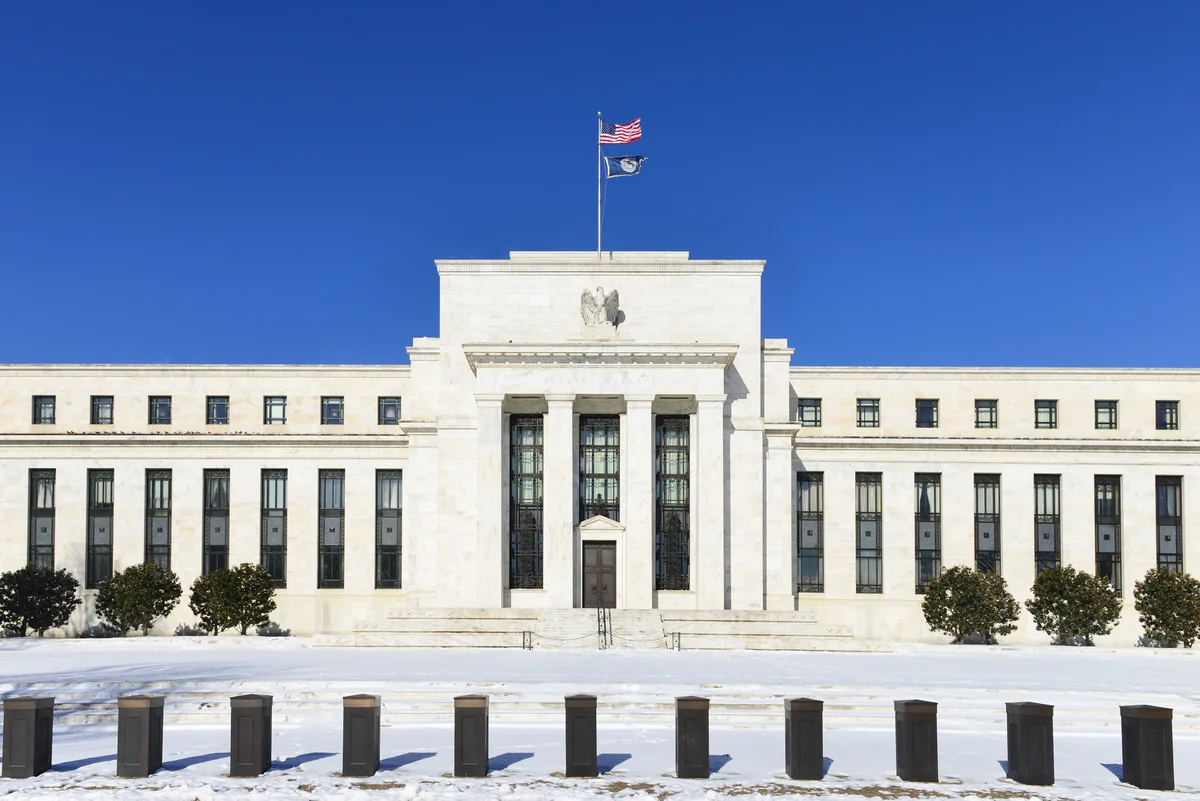
The past week marked a clear shift in global FX dynamics. While economic data and central bank decisions played their part, markets increasingly responded to a deeper force: liquidity. The Federal Reserve’s policy actions and guidance confirmed that the tightening phase is firmly behind us, and that change in regime drove a broad repricing across currencies.
The dollar softened further, Europe found renewed support, and sterling stabilised after a prolonged period of weakness. Rather than reacting to individual data points, FX markets spent the week recalibrating expectations for 2026 and beyond, with liquidity conditions emerging as the dominant driver.
The dollar softened further, Europe found renewed support, and sterling stabilised after a prolonged period of weakness. Rather than reacting to individual data points, FX markets spent the week recalibrating expectations for 2026 and beyond, with liquidity conditions emerging as the dominant driver.
The Macro Backdrop: From Rates to Liquidity
The Federal Reserve cut interest rates again this week, but the size of the move was largely secondary. What mattered more was the confirmation that quantitative tightening has ended and that liquidity is now being actively supported through reserve management operations.
That shift helped fuel risk appetite across asset classes. US equities extended gains, funding markets eased and the dollar continued to lose altitude. The greenback has now fallen for multiple consecutive sessions, reflecting not panic, but a steady erosion of its relative appeal as yields fall and policy uncertainty rises.
Markets increasingly view the Fed’s focus as risk management rather than inflation suppression. With labour market data softening and policymakers openly acknowledging downside employment risks, investors spent the week positioning for a world where US policy no longer dominates global returns.
US Dollar: The Release Valve of the Week
The dollar was once again the primary adjustment mechanism in global FX markets. Weak US labour data reinforced expectations that rate cuts will continue into next year, while the Fed’s latest projections did little to push back against that view.
Crucially, policymakers appeared divided. Some remain wary of inflation persistence, while others are more concerned about employment deterioration. That split, combined with speculation around future Fed leadership, has increased uncertainty around the medium-term policy path.
The result has been consistent dollar underperformance. Yield support has faded, hedging costs are falling and the currency’s risk premium looks increasingly thin. While some analysts caution that US growth resilience could limit downside, this week reinforced the view that the dollar’s role as the default safe anchor is weakening, at least for now.
Euro: Stability Finds a Bid
The euro emerged as one of the clearer beneficiaries of the dollar’s retreat. Importantly, this was not purely a function of US weakness. Eurozone data surprised modestly to the upside, with business surveys pointing to firmer activity toward year-end.
At the same time, the European Central Bank continues to project policy stability. Markets are no longer pricing aggressive easing, and recent commentary has even raised the possibility that the next policy move could eventually be higher, not lower. That perception, whether sustained or not, provided the euro with relative clarity at a time when US policy direction feels less certain.
The combination of improving sentiment, policy divergence and supportive technical structure allowed the euro to hold gains through the week, reinforcing its position as a credible alternative within the G10 complex.
British Pound: Stability, Not Strength
British Pound: Stability, Not Strength
Sterling spent the week consolidating recent gains rather than extending them. Earlier optimism gave way to a more cautious tone after UK growth data disappointed, underlining the fragility of the domestic recovery.
While global risk appetite and dollar weakness continue to offer support, the pound remains more exposed to local fundamentals than many of its peers. Markets are fully priced for near-term easing from the Bank of England, and increasingly attentive to how far that cycle may extend into 2026.
This week’s data reinforced the idea that the UK economy is slowing more decisively than previously expected. That backdrop limits the pound’s ability to outperform on a sustained basis. For now, sterling looks rangebound, supported externally but constrained internally.
Japanese Yen: A Policy Story Returns
Japan quietly reasserted itself as a policy-driven currency this week. Expectations for a Bank of Japan rate hike later this month provided intermittent support for the yen, even as global risk appetite worked against traditional safe havens.
The contrast with the Fed is becoming increasingly important. While US policy is easing, Japan is one of the few major economies still contemplating tighter conditions. That narrowing differential has begun to alter long-standing assumptions around yen weakness.
That said, caution remains warranted. Carry dynamics and fiscal considerations continue to limit enthusiasm, leaving the yen sensitive to shifts in sentiment rather than firmly anchored to a single narrative.
Canadian Dollar: Quietly Supported
The Canadian dollar benefitted from the broader risk-on environment and ongoing US dollar softness. Strong domestic labour data earlier in the week reinforced expectations that the Bank of Canada can remain on hold for an extended period.
With growth projections improving relative to peers and commodity-linked flows remaining supportive, the Canadian dollar continues to look well positioned in a world where liquidity is rising and the dollar is losing altitude.
G10 FX: Momentum Redistribution Underway
This week underlined a broader theme across G10 FX: momentum is being redistributed rather than destroyed. High-beta and commodity-linked currencies found support as liquidity improved, while traditional safe havens lagged.
The defining feature was not volatility, but rotation. As US exceptionalism fades at the margin, markets are increasingly selective, rewarding currencies backed by credible policy paths, stable fundamentals or exposure to improving global sentiment.
Lamera View
This week reinforced that liquidity now matters more than headline rates. The Federal Reserve’s easing bias, combined with an end to balance sheet tightening, has shifted the centre of gravity in FX markets.
The dollar remains vulnerable unless US data reaccelerates meaningfully. The euro is supported by relative policy stability. Sterling has stabilised, but remains structurally constrained. Japan’s policy path introduces volatility, while Canada benefits quietly from the changing backdrop.
As December progresses, guidance will matter more than decisions. Markets are comfortable with where rates are heading in the near term. What they are now pricing is how long the next phase lasts.
Strategist Q&A: What This Week Really Changed in FX
What was the most important driver in FX markets this week?
Liquidity. The Fed’s confirmation that tightening is over and funding conditions are being supported reshaped sentiment across currencies.
Liquidity. The Fed’s confirmation that tightening is over and funding conditions are being supported reshaped sentiment across currencies.
Is the dollar entering a longer-term downtrend?
Not conclusively, but this week strengthened the case for continued pressure as yield support fades and policy uncertainty grows.
Not conclusively, but this week strengthened the case for continued pressure as yield support fades and policy uncertainty grows.
Why did the euro perform well despite mixed growth signals?
Because policy clarity matters. The ECB’s steady stance contrasts with a more flexible Fed, supporting relative euro resilience.
Because policy clarity matters. The ECB’s steady stance contrasts with a more flexible Fed, supporting relative euro resilience.
How should sterling be viewed after this week?
Stable, but not strong. External support remains, but domestic growth and policy risks cap upside.
Stable, but not strong. External support remains, but domestic growth and policy risks cap upside.
What should investors focus on next?
Central bank guidance for 2026. Liquidity conditions will continue to dominate until that outlook changes.
Central bank guidance for 2026. Liquidity conditions will continue to dominate until that outlook changes.