
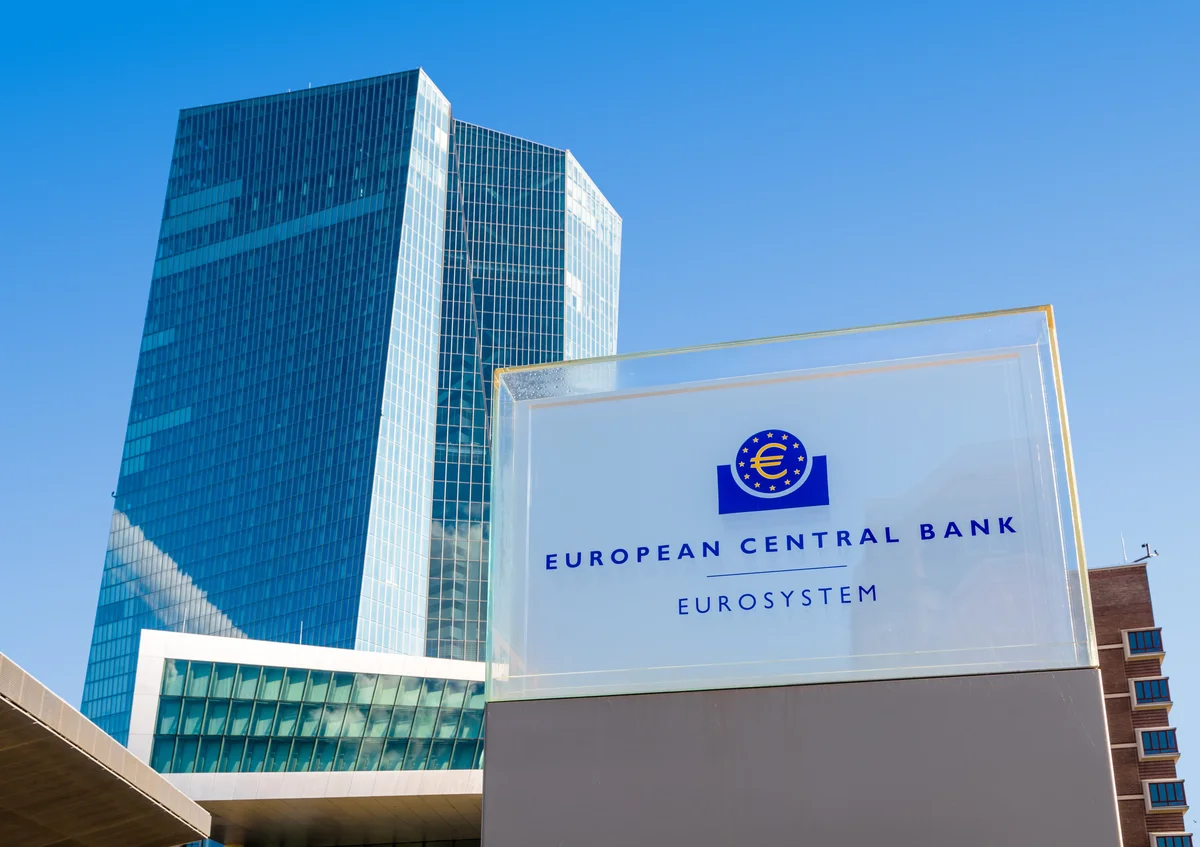
The European Central Bank raised all three of its key interest rates by 25 basis points yesterday, taking the deposit rate to 2.25 percent, the refinancing rate to 2.40 percent and the marginal lending rate to 2.65 percent, effective 17 June. It is the first hike in nearly three years, the first since the tightening cycle peaked in September 2023.
The hike itself surprised nobody. It was fully priced, long telegraphed, and delivered on cue. What matters is not the decision but what it is: a mistake, and one we have been calling since April. In our Sterling's Opening piece we argued the parallel for the ECB was not 2022 but 2011, the year Trichet raised rates into a weakening economy and had to reverse within months. We wrote at the time that this was not a consensus view, it was ours. In early May, in our three-central-banks piece, we flagged June as the likely month of the first hike, with a reversal to follow inside twelve months. The first half of that call has now landed. The second half, the reversal, is the part the market is still not pricing, and it is the part that matters from here.
And the self-indictment is in the ECB's own release. On the morning it hiked, it cut its growth forecasts, to 0.8 percent this year from 0.9, and to 1.2 percent next year from 1.3. It raised its near-term inflation forecasts to capture the energy shock, with 3.0 percent now expected this year. But look at the medium term, the horizon its own mandate actually targets: inflation back at 2.0 percent, dead on target, by 2028, a forecast it revised down this week, not up. By the ECB's own numbers, the shock is front-loaded and passing, and the economy underneath is weaker than it thought three months ago. It hiked into both. Its own statement concedes the position: upside risks to inflation, downside risks to growth.
The call did not require foresight. It required memory. The ECB has made this precise mistake twice before, and the conditions today are the same conditions that produced both.
In July 2008, with oil above $140 and headline inflation high, Jean-Claude Trichet raised rates to 4.25 percent to fight a commodity-driven price shock. Lehman Brothers collapsed weeks later. The eurozone entered its first-ever recession that November, and the ECB was forced to reverse 175 basis points by year-end. In April and July 2011, Trichet did it again, hiking twice into a commodity-driven inflation spike while the sovereign debt crisis was building. On the day of the second hike, Portuguese debt was downgraded to junk. Within months the crisis spiralled, the ECB reversed, and Mario Draghi inherited an economy so fragile he had to promise to do "whatever it takes" to hold the single currency together.
Both times, the pattern was identical. Inflation was driven by energy and commodities, not by an overheating economy. The underlying demand picture was weak. The ECB looked at headline inflation, felt the institutional pull of its price-stability mandate, and tightened into fragility. Both times it was wrong, and both times it had to reverse under worse conditions than if it had simply held. It is now repeating the setup a third time. This piece sets out why the parallel holds, why the ECB feels compelled to act anyway, and what it means for the euro.
The Same Mistake, a Third Time
The conditions that produced the 2008 and 2011 errors are the conditions today. Eurozone inflation accelerated to 3.2 percent in May, well above the 2 percent target, with core at 2.5 percent. But the driver is energy, the result of the Iran war and the disruption to Middle East shipping, not a hot economy generating its own price pressure. Lagarde said as much herself yesterday: the war is weighing on activity, and surveys are pointing to a slowdown, especially in services.
Meanwhile the real economy is weak in a way it was not even in 2011. The ECB's own staff now project growth of 0.8 percent this year and 1.2 percent next, both revised down yesterday, reflecting what the Bank itself describes as the more pronounced impact of the war on commodity markets, real incomes and business confidence. Germany, the bloc's largest economy, has gone roughly three years without meaningful growth. France is stagnant. The eurozone's headline labour market is carried almost entirely by Spain. This is not an economy with the demand strength to generate a self-sustaining wage-price spiral. It is an economy being squeezed from the outside by an energy bill it has to pay regardless of what the ECB does to interest rates.
It helps to be precise about how an energy shock turns into inflation, because the stages matter. The first stage is direct: oil and gas get more expensive, so petrol, heating and electricity rise in the inflation basket immediately. The second is indirect: energy is an input cost for almost everything, so with a lag the bakery's gas bill and the supermarket's diesel turn up in the price of bread, food and services. That is the broadening the eurozone is seeing now, and it is why core inflation has crept to 2.5 percent even though core excludes energy itself. The third stage is the dangerous one, the second-round effect: workers, squeezed by the first two stages, win pay rises to compensate, firms raise prices again to cover the higher wage bill, and inflation becomes self-sustaining long after the original shock has faded. Rate hikes cannot touch the first two stages. A hike does not cheapen a barrel of oil or a bakery's gas bill. The only stage monetary policy can fight is the third, by cooling demand and keeping wage expectations anchored. Stopping stage three is the entire economic case for yesterday's hike.
Which is what makes Lagarde's own words the most striking thing said yesterday. She told the press conference that the ECB is seeing a broadening of inflation in direct and indirect effects but is "not yet at this point in the front of the second-round effects." In plain terms, stage three has not started. And she confirmed that the ECB's own wage tracker and surveys continue to indicate that wage growth should ease over the year. So the president said the one stage a hike can fight has not arrived, her own forward indicator says it is not coming, and the Governing Council raised rates anyway.
The obvious defence is that second-round effects always arrive late, so a central bank should move before they show up. Pre-emption is the whole hawkish case. But that argument only works if the economy is capable of producing a spiral, and this one is not. A wage-price spiral needs two ingredients: workers with the leverage to win pay rises that compensate for higher living costs, and firms with the pricing power to pass the wage bill back into prices. Both require a tight labour market and firm demand. The eurozone has neither. Demand is weak enough that the ECB cut its own growth forecasts yesterday morning. The labour market is loose enough that wage growth is easing rather than accelerating, exactly as the ECB's own tracker shows. Workers squeezed by energy bills in this environment do not win compensating pay rises. They absorb the hit. Firms facing stagnant demand do not pass higher wage costs on. They eat them. Stage three is not running late. The conditions that ignite it are absent. Nor does the credibility version of the argument fare better. Short-term inflation expectations have risen with petrol prices, as they always do in an energy shock. Long-term expectations, the ones that define credibility, have stayed anchored at 2 percent throughout, in the market measures and in the ECB's own surveys. Hiking pre-emptively against a spiral the economy cannot produce, to defend an anchor that has not moved, is not insurance. It is demand destruction with no offsetting benefit. By its own account and its own data, the ECB is hiking against a transmission channel that is not just quiet but closed.
Add the forecasts and the self-indictment is complete. Growth cut. Wage growth easing, per the ECB's own tracker. And on the medium-term horizon its mandate targets, inflation back at 2.0 percent by 2028, a forecast revised down on the very morning of the hike. The near-term numbers went up, because the energy shock is real. But a central bank is not supposed to set policy off the front of an energy spike. It is supposed to look through it to the medium term, and on the ECB's own medium-term numbers, the job is already done.
Serious economists are now drawing the same parallel we drew in April. TS Lombard has called repeating the 2011 hike one of the highest risks facing the eurozone. Berenberg has called the move a mistake that could tip the bloc into recession. The 2011 comparison is becoming consensus. We were making it two months ago. And we would add the point others are skating over: the ECB does not even have the excuse of surprise. It has the case studies. It lived them.
Here is where we part from the market. The consensus is not pricing a reluctant one-off. It is pricing a cycle. Another quarter-point move in September is widely expected, with some in the market pricing as many as three hikes by year-end, and houses such as JPMorgan Asset Management mapping the path through September and into next March. Lagarde refused to pre-commit yesterday, but she did not push back against that pricing either. We think the full path never gets delivered. The ECB hikes into a weakening economy now, perhaps again in September, and is then forced to reverse before the rest of that cycle ever arrives, exactly as it was forced to reverse in 2008 and in 2011. There is one honest difference from those precedents. In 2008 and 2011 the reversal was forced by a crisis, Lehman in one, the sovereign debt spiral in the other. Nothing equivalent is waiting in today's eurozone, with banks capitalised and spreads contained, so the unwind arrives more slowly this time, forced by the growth and inflation data rolling over rather than by a market event. Slower, but the same direction. The market is pricing the hikes. It is not pricing the unwind at all. That is where the mistake, and the mispricing, sits.
Why the ECB Hikes Anyway: The Single-Mandate Trap
The obvious question is why a central bank would repeat a mistake it has made twice and watched blow up twice. The answer is not incompetence. It is institutional design.
The ECB has a single mandate: price stability, defined as inflation near 2 percent over the medium term. That is the whole job, written into the treaty. Compare that with the US Federal Reserve, which has a dual mandate, price stability and maximum employment. That difference is not academic. It is the entire reason the two central banks are behaving differently right now.
Look at the test the Fed is sitting right now, because it is the harder one. US inflation hit 4.2 percent this week, its highest in three years and above the eurozone's 3.2. May payrolls beat consensus by more than double. On a single mandate, that combination forces a hike. Yet the Fed is expected to hold at its meeting next Wednesday, and it can justify holding, because its mandate makes it weigh both sides. On the inflation side, the heat is energy: it drove more than 60 percent of May's monthly increase, while core prices rose just 0.2 percent, softer than forecast and slower than April. That is the part of inflation a rate rise cannot touch. On the employment side, the payrolls strength may prove temporary, flattered by World Cup hiring that washes out over the summer, as we argued earlier this week. A hike into strength that fades does real damage to the half of the mandate the Fed answers for. A central bank required to count both columns can afford to wait for the answer.
So note the scoreboard this week: the bank facing 4.2 percent inflation is holding, and the bank facing 3.2 is hiking. The difference is not the data. It is the mandate. The ECB never opens the employment file. Growth is not its job. Price stability is the whole of it. With inflation at 3.2 percent, acting is the default, and inside the Governing Council it is restraint that would have needed defending, not the hike. The mandate draws no distinction between inflation born of domestic overheating and inflation born of a tanker that cannot get through the Strait of Hormuz. It compels a response to either, whether growth is 0.8 percent or 3.
This is the trap you have to understand to understand the euro. The ECB is not hiking because it believes the eurozone economy is strong. Its own forecasts, cut yesterday morning, say the opposite. It is hiking because its single mandate gives it no institutional room to look through an inflation number this far above target, even when the cause is a supply shock that rate hikes cannot touch. A rate hike does not produce a single additional barrel of oil or cubic metre of gas. It cannot reopen a shipping lane or refill a damaged LNG terminal. All it can do is suppress demand. So the ECB is reducing demand in an economy that already has too little of it, to fight a price shock it has no tool to address, because its mandate tells it it must be seen to act.
This is the structural flaw the energy shock has exposed. A single-mandate central bank cannot get ahead of creeping, supply-driven inflation without moving, and moving is precisely the wrong thing to do when the economy underneath is this weak. The Fed can wait. The ECB feels it cannot. That is why the ECB makes this mistake roughly once a decade, and the Fed does not.
What This Means for the Euro
The textbook says a rate hike supports a currency. Yesterday the textbook lost. The euro fell on the decision, with EUR/USD slipping below 1.16 through the afternoon, and this morning it sits near its weakest level since early April. Part of that is the dollar's own strength, with a hot US wholesale inflation print feeding hawkish Fed bets and the Middle East keeping the safe-haven bid alive.
But it is not just the dollar side, and this is the detail that removes the ambiguity. GBP/EUR has been climbing ever since the hike first started to be priced, and is now approaching 1.16. Sterling, whose own Bank of England meets next Thursday and is expected to hold, has strengthened against the euro all the way into and through the ECB's hike. When a currency falls against both of its major pairs in the run-up to and on the day of a rate rise, the market is not rewarding the hike. It is punishing it, because the hike adds damage to a weak economy without adding strength to the currency's case. And note the split this creates: the rates market is still pricing more hikes, while the currency market is already refusing to pay for them. One of those markets is wrong. We think it is the rates market, and that the currency market is simply early.
That is the market telling you what we have argued since the Lull Before the Oil piece: a hike that does not reflect economic strength does not buy lasting currency strength. This hike reflects a central bank trapped by its mandate, tightening into a slowdown its own forecasts describe. Markets understand the difference between a currency rising because its economy is strong and a currency propped up by a central bank making a mistake it will have to reverse. In 2011, the euro at least enjoyed its hawkish gains for a while before the crisis took them back. Yesterday there were barely any gains to hold. The euro scarcely moved on the announcement and finished the day lower.
So our view on the hierarchy is unchanged. The dollar remains the strongest of the three. The euro remains the weakest. Sterling sits in between, below 1.34 against the dollar on the same dollar strength, but approaching 1.16 against the euro. Yesterday's hike does not alter that order. If anything it confirms it, because a hike into a 0.8-percent-growth economy is a signal of fragility dressed up as strength. The risk for the euro is not the decision itself. It is the reversal that history says tends to follow, and that the rates market is not pricing.
What This Means for Businesses
For businesses with euro exposure, the takeaway is to be careful about reading this hike as euro strength. The market has already delivered its verdict: the euro finished the day of its first rate rise in three years lower against both the dollar and the pound, and the structural backdrop beneath it offers little support. The historical precedent for ECB hikes into this kind of economy is poor, and if the reversal we expect arrives within the next twelve months, the euro's medium-term path is lower, not higher. Which side of that you sit on depends on the direction of your euro flows. A UK business paying European suppliers in euros is on the right side of it, with GBP/EUR approaching 1.16 making those costs cheaper in sterling terms. A business invoicing European customers in euros is on the wrong side, and any spell of euro strength is an opportunity to secure rates on future receipts rather than a trend to wait on. And for companies based in the eurozone, the same divergence simply runs in reverse: sterling and dollar receipts convert better, while anything bought in those currencies costs more.
The broader point is that the eurozone is now the clearest example of a central bank boxed in by circumstances beyond its control: an energy shock it cannot fix, a mandate that forces it to respond, and an economy too weak to absorb the response. That is not a backdrop for euro strength. It is a backdrop for caution. Where certainty on euro costs or receipts matters, this is exactly the kind of divergence that forward cover is built to manage, and we are happy to talk it through.
The ECB has been here before. Twice. Both times it hiked into an energy shock, both times the economy buckled, and both times it had to reverse. We said in April this would be the third. Now it is.
The framework holds. The variable, as ever for the euro, is the growth that is not there.