
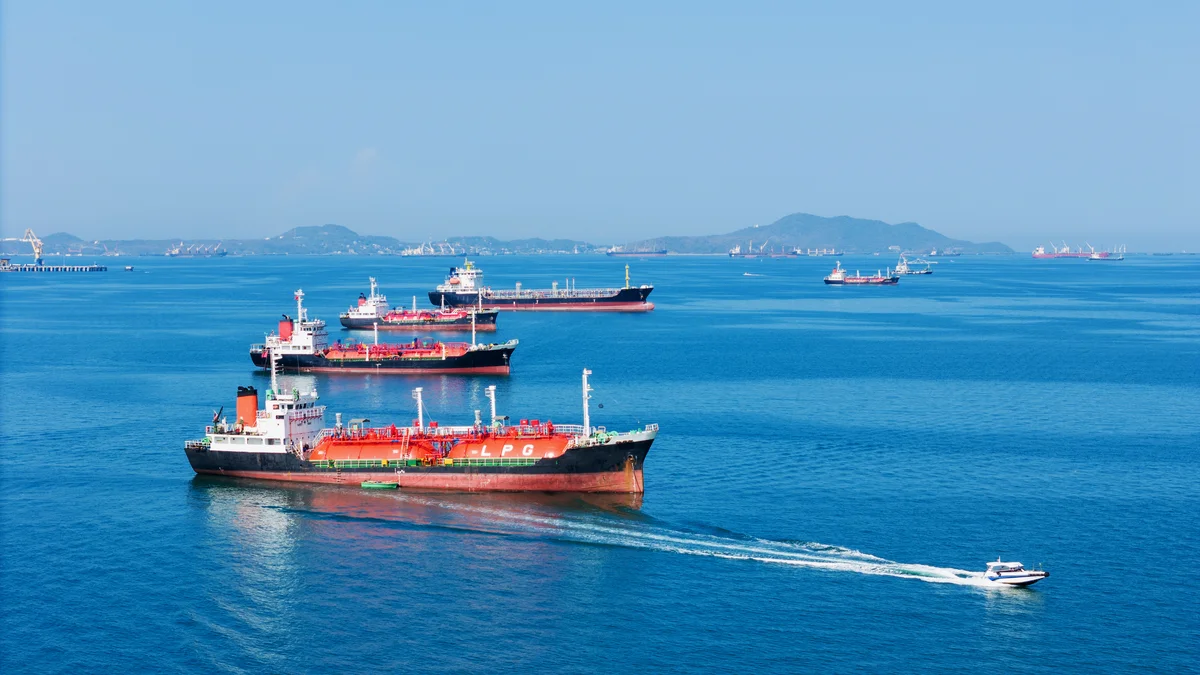
Four things happened today that matter for every business with international currency exposure.
Iran's Foreign Minister declared the Strait of Hormuz completely open for all commercial vessels. A 10-day Israel-Lebanon ceasefire is holding. Trump said a US-Iran peace deal is now "very close" and a second round of talks is expected this weekend. And France and Britain are hosting a 40-country Hormuz summit today to coordinate reopening the waterway permanently.
Markets are moving right now.
Oil is falling. The safe-haven dollar bid that built up over 47 days of the worst energy disruption in history is beginning to unwind. Sterling and the euro are strengthening. The inflationary premium that has been keeping central banks on hold is starting to ease.
This is not a resolution. But it is the most significant de-escalation signal since the war began on 28 February.
The Lamera Framework: How We Analyse the FX Market
Every day, we strip the noise back and ask four simple questions:
- What is the market expecting?
- What would surprise it?
- If that surprise happens, who benefits, USD, EUR, or GBP?
- Where are our clients exposed?
Because in FX, outcomes are rarely driven by what is happening. They are driven by the gap between expectation and reality.
What Happened Today
At 12:57 UTC, Iranian Foreign Minister Abbas Araghchi posted on X that passage through the Strait of Hormuz is declared completely open for the remaining period of ceasefire for all commercial vessels. The announcement came in line with the Israel-Lebanon ceasefire, which Iran had made a condition of broader diplomatic progress.
At 13:27 UTC time, President Trump confirmed it on Truth Social. "The Strait of Hormuz is completely open and ready for business and full passage," Trump wrote, adding that the naval blockade will remain in force as it pertains to Iran only, until the transaction with Iran is 100% complete. Critically, Trump stated that "most of the points are already negotiated" and the process should go quickly.
That is the strongest public signal yet that a deal is imminent.
At 13:27 UTC time, President Trump confirmed it on Truth Social. "The Strait of Hormuz is completely open and ready for business and full passage," Trump wrote, adding that the naval blockade will remain in force as it pertains to Iran only, until the transaction with Iran is 100% complete. Critically, Trump stated that "most of the points are already negotiated" and the process should go quickly.
That is the strongest public signal yet that a deal is imminent.
The Strait has been effectively closed since 2 March, when the IRGC declared it shut following the US and Israeli strikes on Iran that began 28 February. Before the closure, approximately 20% of global oil supplies and 20% of global LNG trade passed through the waterway daily. The disruption triggered what the International Energy Agency described as the largest energy supply shock in history.
Within hours of the Hormuz announcement, Axios reported that the US and Iran are negotiating a three-page plan to end the war. One element under active discussion is a $20 billion cash-for-uranium deal: the US would release $20 billion in frozen Iranian funds in return for Iran surrendering its stockpile of enriched uranium. Trump confirmed that a second round of talks is expected this weekend in Islamabad, with Pakistan continuing to mediate and Egypt and Turkey providing behind-the-scenes support.
This is not a signed agreement. But the direction of travel has shifted materially in the past 24 hours.
A Softer Dollar, Not a Stronger Sterling Story
It is important to be clear about what is actually driving today's currency moves.
Sterling and the euro are not strengthening because the UK or eurozone economies have improved. They are strengthening because the dollar is weakening. And the dollar is weakening because the geopolitical risk premium that had been supporting it for 47 days is starting to unwind.
When conflicts escalate, capital flows into safe-haven assets. The US dollar is the primary beneficiary of that dynamic. When risk sentiment improves, that flow reverses. Investors rotate out of the dollar and back toward currencies that had been under pressure during the escalation phase.
Today's moves are the clearest expression of that mechanism since the original ceasefire in early April triggered a similar, though shorter-lived, rally. The euro in particular has moved sharply, recovering significant ground from its lows during the peak of the energy shock, as markets unwind the stagflationary premium they had priced in for the eurozone.
The key question is whether this move is sustainable or another brief repricing. The answer depends entirely on whether a deal gets done before the ceasefire expires.
The $20 Billion Deal: What It Means
The Axios report published today describes a three-page framework under discussion. The core element is straightforward: the US releases $20 billion in frozen Iranian assets and Iran hands over its stockpile of enriched uranium.
Iran currently holds approximately 460 kilograms of uranium enriched to 60%, a level approaching weapons-grade. Removing that stockpile has been a non-negotiable US condition throughout the negotiations. The frozen assets question has been Iran's primary economic demand. The $20 billion figure represents a significant portion of the Iranian funds frozen in various jurisdictions globally, estimated in total at over $100 billion.
The deal is not done. The first round of talks in Islamabad collapsed on 12 April over how long Iran should freeze uranium enrichment. The US wanted 20 years. Iran offered five. That gap has not been publicly resolved. But the Hormuz opening today and the ceasefire in Lebanon suggest both sides have made concessions since Sunday that are creating space for a second round.
What a deal would mean for FX: Oil falls sharply. Dollar safe-haven demand evaporates. Sterling and the euro extend their recent gains. The Bank of England and ECB regain room to cut rates as inflationary pressure from energy eases.
What a breakdown would mean for FX: Oil recovers rapidly. The dollar strengthens. Sterling and the euro give back today's moves and potentially more. The ceasefire expires on 21 April and if no extension is agreed, the risk of renewed military action returns within days.
What the Energy Unwind Means for UK Businesses
The past 47 days have embedded a significant inflationary premium into the UK economy. Aluminium is up 46% over twelve months. Two of the world's largest smelters are offline. UK producer price inflation has been building.
A sustained Hormuz reopening does not immediately reverse that. EGA's Al Taweelah facility in Abu Dhabi faces up to 12 months of restoration. Bahrain's Alba is still operating at 30% capacity. The structural supply shock in aluminium is not resolved by a ceasefire.
But the margin cost pressure from energy, and the Bank of England rate path implications that flow from it, would ease materially if oil prices fall and stay down. That changes the interest rate calculus in a way that would support further sterling strength and potentially allow the MPC to cut rates sooner than currently priced.
The Caveats That Matter
Three things could reverse today's moves quickly.
The ceasefire expires 21 April. Four days is a very short window for a deal that has already collapsed once. If a second round of talks fails or is not even convened before Tuesday, the risk of renewed military action is real and the market will reprice rapidly.
The Hormuz opening is conditional. Iran declared it open for the remaining ceasefire period only, under IRGC-coordinated routes. The US naval blockade of Iranian ports remains in effect separately. Commercial vessels still face practical and insurance barriers to transit.
The Israel-Lebanon ceasefire was only agreed today. Iran explicitly linked the Hormuz opening to it holding. If Israeli strikes resume or Hezbollah retaliates, Iran could reverse its Hormuz declaration quickly.
The Israel-Lebanon ceasefire was only agreed today. Iran explicitly linked the Hormuz opening to it holding. If Israeli strikes resume or Hezbollah retaliates, Iran could reverse its Hormuz declaration quickly.
Markets are pricing optimism. They are not pricing certainty.
What Matters Next
The weekend talks in Islamabad. If the second round of US-Iran negotiations reaches a framework agreement on uranium and frozen assets, the market reaction will be significant and sustained. A deal would represent a fundamental shift in the macro environment that has defined FX markets since late February.
The ceasefire expiry on 21 April. If no extension or deal is announced by Tuesday, the two-week window closes and the situation reverts to pre-ceasefire conditions almost immediately.
The Hormuz summit today. France and Britain are hosting 40 countries. The outcome will shape what a post-deal multilateral framework for Strait management looks like, which matters for how quickly energy flows can normalise if a deal is agreed.
Lamera View
Today is the most consequential single day for currency markets since the ceasefire was announced on 7 April. The combination of Hormuz opening, Lebanon ceasefire, deal framework emerging and major power summit happening simultaneously is a genuine inflection point.
But it is not a done deal. The gap between a risk-on rally driven by optimism and a sustained repricing driven by a confirmed agreement is wide. In our experience, this is exactly the kind of environment where businesses that have a clear strategy act decisively, and businesses without one react after the move has already happened.
For businesses with upcoming dollar payments, dollar revenues to convert, or commodity costs tied to the energy shock, today's window is worth a conversation before the picture changes again.
In this market, four days is a long time.
FX Market FAQ
Why does the Strait of Hormuz opening weaken the dollar? The dollar strengthens during geopolitical crises because global capital rotates into safe-haven assets. When risk sentiment improves, that flow reverses. Oil prices fall, inflation expectations ease, and the safe-haven premium in the dollar unwinds. Sterling and the euro, which had been pricing in prolonged energy-driven inflation, benefit as that risk premium is removed.
What is the $20 billion uranium deal? According to Axios, the US and Iran are discussing a framework under which the US would release $20 billion in frozen Iranian funds in return for Iran surrendering its stockpile of enriched uranium. The deal is not finalised. A second round of talks is expected this weekend in Islamabad. Significant gaps remain, including the timeline for uranium enrichment restrictions.
Is the Strait of Hormuz actually open now? Iran has declared it open to commercial vessels for the remaining ceasefire period under IRGC-coordinated routes. The US naval blockade of Iranian ports remains in effect separately. The situation is improved but not fully normalised.
What does this mean for UK businesses? For businesses receiving dollars, today's sterling strength means USD revenues convert into fewer pounds. If you believe the deal gets done and sterling continues to strengthen, hedging now protects current rates. For businesses paying in dollars, the current window of dollar weakness may be an opportunity to cover forward requirements. For manufacturers with commodity input costs, the energy unwind will take longer to feed through than the currency move.
What happens if talks collapse again? Oil rebounds sharply. The dollar recovers its safe-haven premium. Sterling and the euro give back today's gains. The ceasefire expiry on 21 April without an agreement would likely trigger a rapid return to pre-ceasefire market conditions.
Work With Lamera
If you have upcoming currency requirements, USD revenues affected by today's moves, or commodity costs linked to the energy environment, we can help you structure your timing and reduce risk.
Get in touch to discuss your position.