
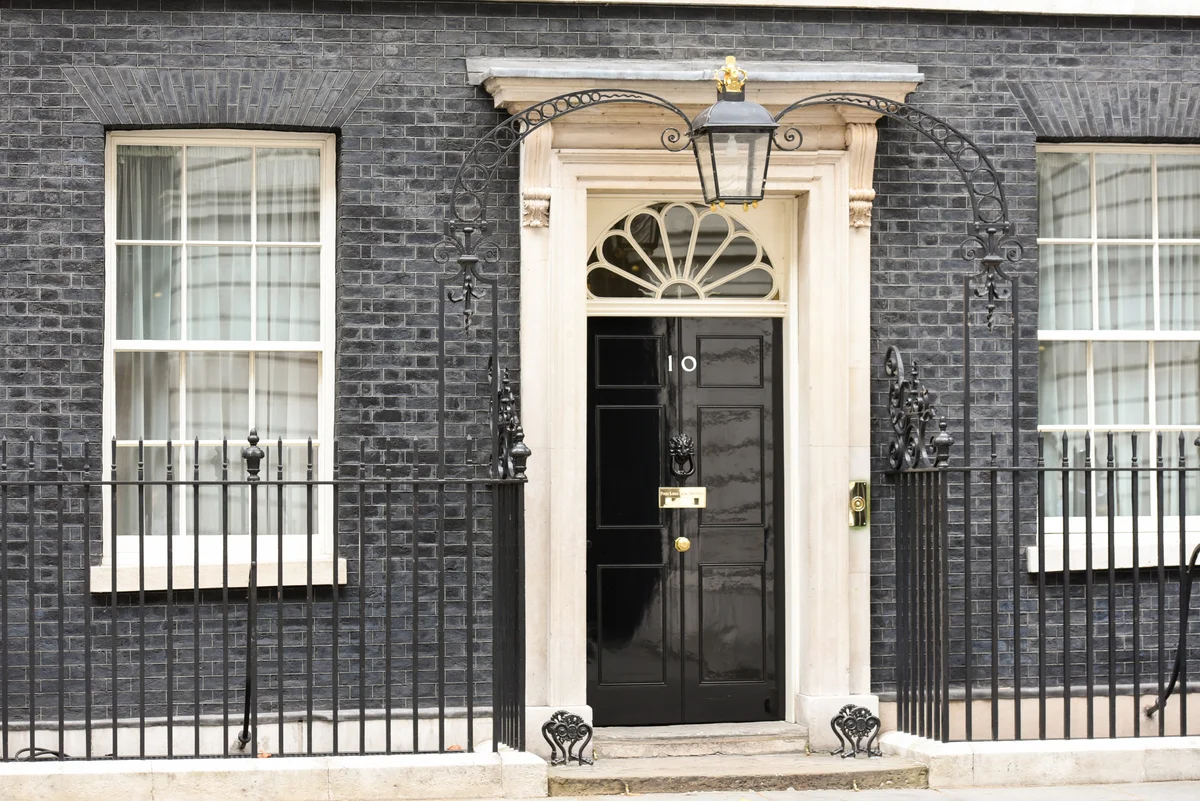
A Prime Minister resigned yesterday, and the gilt market rallied. That is the first thing to understand about Keir Starmer's departure: the bond market, which spent May selling off on the prospect of his most likely successor, greeted the actual resignation with relief. The ten-year gilt yield has fallen below 4.8 percent, down from around 5.15 percent at the height of the May panic, more than thirty basis points of relief in a matter of weeks. Sterling is a touch softer against a strong dollar, around 1.32, but that is the dollar's story, not Britain's. The cleaner read on how the market judged the UK news is in the euro cross, and there the pound has rallied, climbing towards 1.16 against the euro since the resignation, near the top of its recent range. Against a strong dollar sterling slips; against a weak euro it gains. The domestic signal sits between the two, and on balance it says relief.
This needs explaining, because it is the opposite of what a political resignation usually does, and the explanation is the whole story. The market is not relieved that Starmer is gone. It is relieved at how he is going: in an orderly, fast, and increasingly predictable way, towards a successor it has spent the last six weeks learning to live with.
Why the Relief Is Real
Two things have calmed the market since the May selloff.
The first is the orderly path. Andy Burnham is now close to certain to be the next Prime Minister. He won the Makerfield by-election on 18 June with a majority of over nine thousand, beating Reform where the party had been expected to run him close, and he had the backing of more than two hundred Labour MPs by 20 June. Wes Streeting, who had the numbers to mount his own challenge, has instead endorsed Burnham rather than split the party. A messy, drawn-out succession battle was the market's fear. What it is getting, so far, looks more like a coronation.
The second is more interesting, and it is the part most of today's coverage is missing. The bond market has already disciplined Burnham, and he has learned the lesson.
The Bond Market Put Him in His Place
Burnham earned the gilt market's distrust last year when he told the New Statesman that Britain had "to get beyond this thing of being in hock to the bond market." Markets do not forget a line like that. When his path to the leadership opened in May, gilts sold off hard, thirty-year yields hitting their highest since 1998, and the pound had its worst week since 2024. Investors heard a left-wing challenger who thought he could ignore them, and they priced it.
What happened next is the reassuring part. Burnham rowed it back. "I have never said you can just ignore the bond markets," he told ITV, and he pledged commitment to the existing fiscal rules. The market that broke Liz Truss in 2022, the same one with the long and unforgiving memory of an unfunded budget, did to Burnham in opposition what it did to Truss in office: it put him in his place. The difference is that Burnham learned it before reaching Downing Street rather than after. As one observer put it this week, he seems to have genuinely understood that you cannot govern the UK without the market's support.
That is why gilts have rallied. Not because the market loves Burnham, but because the market has tested him and he has submitted. The relief is the relief of a creditor who has watched a borrower finally acknowledge who holds the whip.
But it is conditional, and the condition is proof. Investors are taking what one fixed-income manager called a "show me first" view. Burnham has said the right things; he has not yet had to do them. A meaningful camp remains sceptical. Deutsche Bank still expects investors to fear higher spending under a Burnham government, and others are holding an underweight on sterling and a steepening bias on the gilt curve precisely because the reassurances are words, not yet a record. The market has lowered its guard. It has not put it away.
The Question Is No Longer the Prime Minister. It Is the Speed, and the Chancellor.
This is the heart of it. With Burnham close to settled and fiscally house-trained, the identity of the Prime Minister has stopped being the variable that matters. Two questions have replaced it, and they are what the market is now watching: how fast this happens, and who ends up at the Treasury.
Speed is the first, and right now it is the more immediate. If only one candidate clears the threshold of eighty-one MPs when nominations close on 16 July, Burnham is elected uncontested and a new Prime Minister is in place by mid-July. If a rival forces a contest, the process runs to a leader being elected by 1 September. That gap, mid-July versus the start of September, is six additional weeks of political uncertainty hanging over the country, and it is the difference the market cares about most in the near term. An uncontested coronation is the market-friendly outcome and the one currently looking most likely. A drawn-out contest is not, not because of who would win it, since Burnham would win either way, but because markets dislike the limbo more than they dislike the result. The faster this is resolved, the better for sterling and for gilts, and the longer it drags, the more risk premium creeps back in.
The second question matters more over the life of the next government, and it is who becomes Chancellor. Burnham himself is now a known quantity, committed to what he calls "business-friendly socialism" and signed up to the fiscal rules. The Treasury, though, is wide open. Several names are in the frame, including Shabana Mahmood, who has signalled she would rather stay at the Home Office, the work and pensions secretary Pat McFadden, and others around the Burnham campaign. But for the market, the range is best understood through the two names that bracket its hopes and its fears, because they point in opposite directions for sterling.
At the reassuring end is Wes Streeting. He set out his economic stall last week, insisting Labour must not "play fast and loose with the public finances" and calling for a move towards "progressive capitalism." His framing has been pointed. Writing in the Financial Times, he argued that "social democracy is as much about a successful market economy as it is about an active state," and that when Labour forgets that, the country loses. He went further, making the case that Labour must be "as focused on wealth creation as we are on wealth distribution," and that growth is the only route to tackling Britain's inequalities. That is not the language of a man content to stay where he is, and it is worth asking whether it is Streeting quietly staking out ground, for the Treasury, or for something larger down the line. Either way, the market reads it as reassurance, and the substance of it, growth before redistribution, is exactly what sterling needs to hear from whoever ends up at the Treasury. Senior Labour figures have already floated offering him the Treasury as part of a deal to keep him out of the leadership race. A Streeting chancellorship would be the market's preferred outcome, a figure from the party's right, fiscally cautious, counterbalancing the soft-left instincts of the leader above him.
At the other end is Ed Miliband. On paper he was the natural pick, a former Treasury adviser with a background in economics, and he had been seen as the most likely choice. But the warning against him has come from an unexpected direction. Sharon Graham, general secretary of Unite, one of Labour's largest union backers, told The Observer that Miliband as Chancellor would be "a noose around the neck of what we need to do on jobs." When a union leader, not a banker or a Conservative, says a figure on Labour's own left would strangle job creation, citing his North Sea drilling refusal and his electric-vehicle targets that carmakers warn could close factories, the market notices. A Labour grandee put the fiscal version more bluntly, warning that putting Miliband in the Treasury would be "a lurch to the left on fiscal and economic policy, so you are in danger of spooking the markets."
The nuance worth holding is that the concern about Miliband is not that he is fiscally reckless. He was, in fact, among those urging Burnham to calm the bond market by sticking to the fiscal rules. The fear he represents is industrial and business-facing: the interventionist instinct, the predators-and-producers view of business that alienated the City when he led the party, and the energy agenda the unions themselves now say costs jobs. That is a different risk from unfunded borrowing, but for sterling it points the same way.
So the market's calm rests on a specific bet: a fast, uncontested transition to a fiscally disciplined Burnham, with a market-friendly Chancellor beside him. Where in the range between a Streeting and a Miliband the appointment lands is the single biggest domestic variable left, and it is not yet settled. Slow the transition down, a contest that drags to September, or unsettle it, a Treasury handed to the wing of the party the unions are warning against, and the calm does not survive it.
The Bigger Picture for Sterling
A note of caution sits underneath all of this, and it is worth keeping in proportion. The political story is the one moving the market today, and the immediate signals on it are reassuring. But the pound's deeper problem is the one we set out in the Sterling Trap piece, and it has not gone anywhere: a country with high debt, the highest borrowing costs in the G7, and too little growth to escape the hole. This morning's business surveys nudged that the wrong way, with UK activity slipping into mild contraction against forecasts of growth. One month of soft data is not the story, and it does not change the political read. But it is a reminder that whoever wins this contest, and whoever they put at the Treasury, inherits the same underlying problem, and that an orderly transition handled well does not by itself fix the thing that actually ails sterling.
That the pound can rally against the euro through a leadership crisis, with the economy slipping into contraction, says as much about the euro as about sterling. As we argued after the ECB hiked into a weakening eurozone, the euro is the weakest of the three major currencies we follow, and weeks like this are why. Sterling's gains here are less a vote of confidence in Britain than a verdict on the currency on the other side of the trade.
Our view is that the single most helpful thing for the pound would be the one thing British politics has been least able to provide: a consistent, sustained application of pro-growth policy, held to for long enough to work. The UK does not lack plans. It lacks continuity. Seven prime ministers in a decade, each unwinding the last one's direction, is itself a drag on growth, because businesses and investors cannot commit capital through constant changes of course. A settled government with a credible, stable, pro-growth agenda, fiscal discipline paired with the supply-side reform and investment that actually lifts output, would do more for sterling over time than any single chancellor appointment or any one month of data. That, not the identity of the next leader, is what the pound is ultimately waiting for. It is also, for what it is worth, the argument Streeting himself has been making.
This is why the relief in the gilt market, real as it is, is not an all-clear. The market has tamed Burnham and is waiting to see his Chancellor, and in the near term the speed of the transition is what it is watching most closely. But the best version of all this, a fast coronation and a market-friendly Treasury, still lands the same country in the same trap unless it comes with the one thing that has been missing, a stable and consistent commitment to growth. The politics is what moves the pound this month. Growth, or the lack of it, is what moves it over the next year.
What This Means for Businesses
For businesses with sterling exposure, the practical reading is that the political risk is real but two-sided, and the immediate direction is calmer than the headlines suggest. The orderly transition and Burnham's fiscal submission have taken the worst tail risk off the table for now, which is why gilts have rallied rather than sold off. That removes a reason to expect a sharp, disorderly move in the pound in the coming days.
But the downside is asymmetric, and that is the part to plan around. Sterling is roughly fairly valued, which means the market is relaxed, which means there is more room for the pound to fall on a negative surprise than to rise on a positive one. The negative surprises are identifiable: a leadership contest that drags into September, a Chancellor appointment that spooks the City, or more data confirming the economy has stalled. Any of those reprices sterling lower from levels that already assume a smooth outcome.
For a business with sterling receipts or costs over the summer, that argues for treating the current calm as an opportunity to plan rather than a state that will hold by itself. The transition looks orderly today, and the speed of it is the near-term variable to watch. The economy underneath it remains the longer-term one. Where certainty on a future sterling rate matters, this is exactly the kind of asymmetric setup that forward cover is built for, and we are happy to talk it through.
The market has done the hard part already. It has tamed the man most likely to be Prime Minister. Now it wants to see who he puts next door, how quickly the question is settled, and whether anyone in Westminster has an answer to the only thing that ultimately moves the pound, which is where the growth is going to come from.
Q: Why did UK gilts rally when Starmer resigned?
A: Markets read the resignation as the start of an orderly, fast transition to Andy Burnham, who has committed to the fiscal rules after the bond market sold off on his earlier comments. The ten-year gilt yield fell below 4.8 percent, down from around 5.15 percent during the May selloff.
Q: Why did UK gilts rally when Starmer resigned?
A: Markets read the resignation as the start of an orderly, fast transition to Andy Burnham, who has committed to the fiscal rules after the bond market sold off on his earlier comments. The ten-year gilt yield fell below 4.8 percent, down from around 5.15 percent during the May selloff.
Q: Is Andy Burnham bad for the bond market?
A: Less than feared. Burnham earned the market's distrust by saying Britain should not be "in hock to the bond market," but he has since rowed that back and pledged to keep the existing fiscal rules. Investors are taking a "show me first" view, reassured by his words but waiting for proof.
A: Less than feared. Burnham earned the market's distrust by saying Britain should not be "in hock to the bond market," but he has since rowed that back and pledged to keep the existing fiscal rules. Investors are taking a "show me first" view, reassured by his words but waiting for proof.
Q: Who will be Chancellor under Andy Burnham?
A: It is not settled, and it matters more than the leadership. Names in the frame include Shabana Mahmood and Pat McFadden, but the market's hopes and fears are bracketed by Wes Streeting, who favours fiscal caution and "progressive capitalism," and Ed Miliband, whom Unite warned would be "a noose around the neck" of job creation.
A: It is not settled, and it matters more than the leadership. Names in the frame include Shabana Mahmood and Pat McFadden, but the market's hopes and fears are bracketed by Wes Streeting, who favours fiscal caution and "progressive capitalism," and Ed Miliband, whom Unite warned would be "a noose around the neck" of job creation.
Q: How quickly will the UK have a new Prime Minister?
A: If only one candidate clears the 81-MP threshold when nominations close on 16 July, Burnham could be elected uncontested by mid-July. A contested race would run until 1 September, six more weeks of political uncertainty that markets would rather avoid.
A: If only one candidate clears the 81-MP threshold when nominations close on 16 July, Burnham could be elected uncontested by mid-July. A contested race would run until 1 September, six more weeks of political uncertainty that markets would rather avoid.
Q: What does Starmer's resignation mean for the pound?
A: The immediate reaction was calm: gilts rallied and the pound rose towards 1.16 against a weak euro, while slipping against a strong dollar. But with sterling roughly fairly valued and UK activity slipping into contraction on June's PMI data, the downside is asymmetric, with more room to fall on a negative surprise than to rise.
A: The immediate reaction was calm: gilts rallied and the pound rose towards 1.16 against a weak euro, while slipping against a strong dollar. But with sterling roughly fairly valued and UK activity slipping into contraction on June's PMI data, the downside is asymmetric, with more room to fall on a negative surprise than to rise.